홍보물
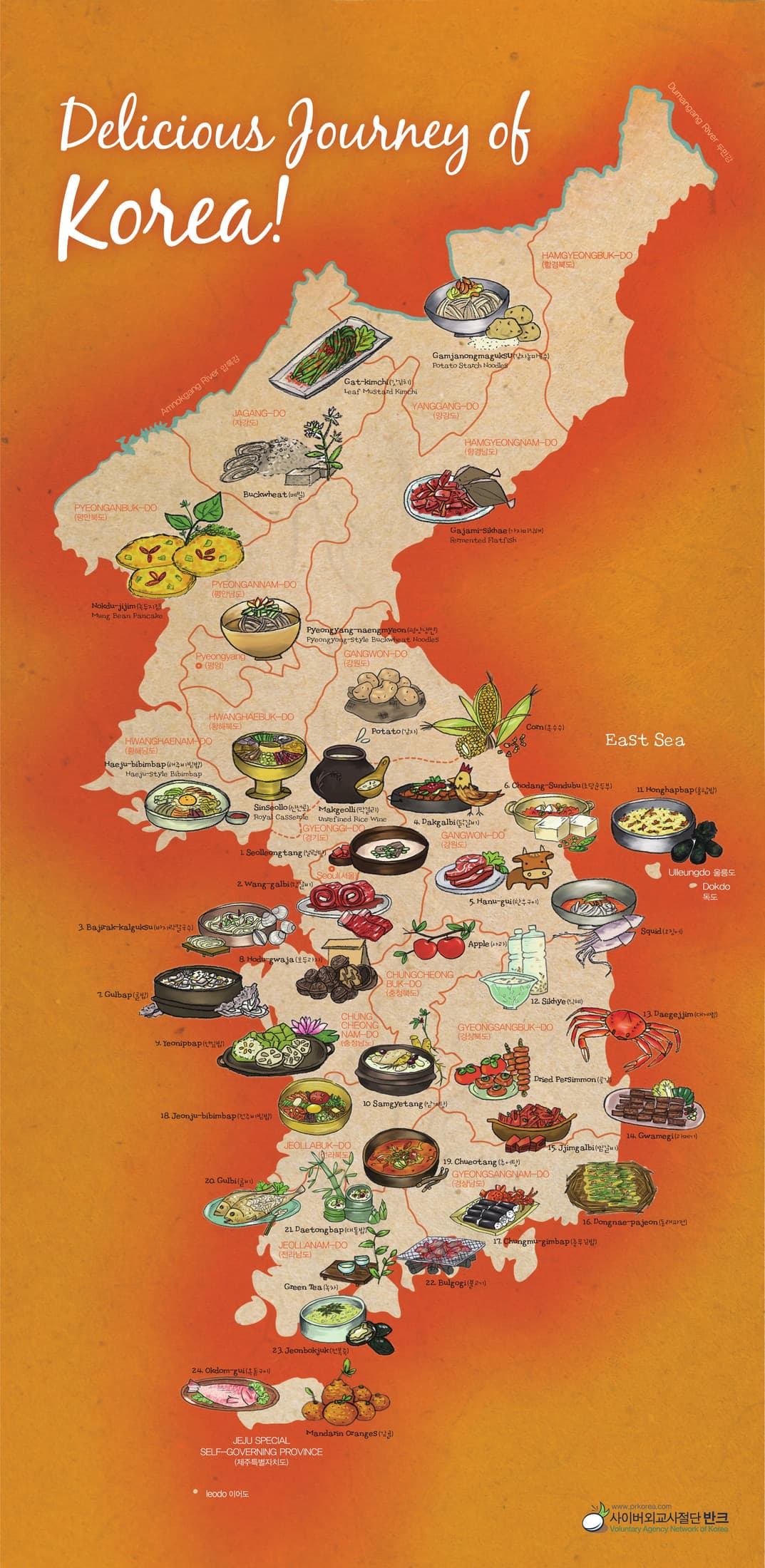
한국음식 지도카드 (2009)
Korean Food Map Cards (2009)
한국어
한국음식지도카드는 남북한 음식 32종을 한국지도와 함께 소개하는 홍보물이다. 남한 음식 24종은 뒷면에 간략한 설명을 더했고, 음식과 재료를 맞히는 퀴즈도 실어 재미있게 한식을 즐길 수 있도록 구성했다.
EnglishThe Korean Food Map Cards is a promotional item that introduces 32 kinds of North and South Korean food along with a map of Korea. The 24 South Korean dishes each come with a short description on the back, plus a fun quiz to match foods with their ingredients, making it an enjoyable way to learn about Korean food.
자료 원고 · English
Delicious Journey of Korea!
1. Seolleongtang, Ox Bone Soup / 설렁탕
Seolleongtang is a soup made with ox bones, intestines and shank, simmered for a long time. It is served with cooked rice and seasoned with green onions, black pepper and salt.
2. Wang-galbi, King Size Beef Ribs / 왕갈비
Suwon became famous for galbi as the cattle market developed during the reign of King Jeongjo (1752-1800) of the Joseon Dynasty. In particular, Suwon galbi is known as “the king size beef rib” due to its huge size, which is more than 15 ㎝ each, and its great taste.
3. Bajirak-kalguksu, Hand-style Noodle Soup with Little-neck Clams / 바지락칼국수
Kalguksu has various kinds of flavors according to its main ingredient, such as beef, chicken, seafood, or others. Seasoned with bajirak (little-neck clam), Bajirak-kalguksu’s soup tastes good and refreshing.
4. Dakgalbi, Spicy Grilled Chicken / 닭갈비
Dakgalbi refers to stir-fry chicken and vegetables such cabbage, sweet potato, carrot, and sesame leaf together with spicy seasoning in a big pan. After eating Dakgalbi, the leftover seasoning is stir-fried with cooked rice, which makes an extraordinary taste.
5. Hanu-gui, Grilled Korean Beef / 한우구이
Hanu refers to Korean local cattle, and especially those bred in Hoengseong, Gangwon Province are famous in the country. Gangwon Province’s unique natural conditions of the highland, more than 600m above the sea level, improve the meat’s texture and flavor.
6. Chodang-Sundubu, Soft Tofu / 초당순두부
To make tofu, grind soaked beans and boil them before coagulating them. ‘Chodang’ originates from pen name Heoyeop(1517-1580), vice envoy of Gangneung area of the Joseon Dynasty, and the tofu he made was called Chodang Tofu. Tofu tastes nutty and plain and is a healthy food with low calories.
7. Gulbap, Cooked Rice with Oyster / 굴밥
Oyster, often called the ‘milk of sea’, is very nutritious, which has been favored in both the East and the West. Gulbap is a representative Korean oyster cuisine. To make gulbap, cook rice with oysters and mix it with seasoning before eating.
8. Hodu-gwaja, Walnut Cookies / 호두과자
Hodu-gwaja is a cookie shaped like a walnut. They are filled with the mushy red-bean, and taste soft and sweet. They originated from Cheonan, but now you can find them anywhere in Korea.
9. Yeonipbap, Cooked Rice Wrapped with Lotus Leaf / 연잎밥
In Buyeo, there is Gungnamji Pond constructed in Baekje Kingdom (18 B.C- A.D 660). Since this pond has been famous for lotus flowers, people of the area have cooked rice wrapped with lotus leaves.
10. Samgyetang, Ginseng Chicken Soup / 삼계탕
Samgyetang, a ginseng chicken soup, is the most common and famous health food eaten in the summer. A chicken, just enough for a single serving, is stuffed with ginseng, garlic, jujube, and sweet rice. Geumsan is a representative area for ginseng cultivation.
11. Honghapbap, Cooked Rice with Sea Mussels / 홍합밥
Honghapbap, cooked rice with sea mussels, soy sauce, and sesame oil, had been a special dish only for the residents of Ulleungdo Island, but now it became a favorite menu also for the tourists from the mainland.
12. Sikhye, Rice Punch / 식혜
Sikhye is a punch made by fermenting steamed rice in malt water. Since sikhye helps digestion, it is mostly preferred as a dessert in festivals and feasts when people dine much more than any other days.
13. Daegejjim, Steamed King Crab / 대게찜
As daege looks like bamboo, it is named dae (bamboo) crab. Generally, daege is served as a steamed dish without special seasoning, and it is stringy and tastes plain. Moreover, Yeongdeok area of the east coast has long been famous for daege.
14. Gwamegi, Semi-dried Herring and Saury /과메기
Gwamegi refers to semi-dried herring and saury. Although people generally eat gwamegi with garlic and leeks wrapped in seaweed stem, people in Pohang, the area of gwamegi production, eat plain dried gwamegi to enjoy its unique taste.
15. Jjimgalbi, Spicy Braised Beef Ribs / 찜갈비
To make Jjimgalbi, first thoroughly steam galbi (beef rib) and steam it again with a spicy sauce made of ground red pepper, garlic, and ginger for 10 minutes. It is fairly spicy, so your eyes might water. The food is so popular in Daegu, home of jjimgalbi, in that even a ‘Jjimgalbi Alley’ was created.
16. Dongnae-pajeon, Dongnae-style Seafood and Green Onion Pancake / 동래파전
Dongnae-pajeon is the food that Dongnae vice envoy of the Joseon Dynasty presented to the king. To make one, fry the dough that mixes flour and rice flour with plenty of green onions and seafood. Today’s Dongnae-pajeon has become a favorite dish among ordinary people, not the kings.
17. Chungmu-gimbap, Chungmu-style Gimbap, Dried Seaweed Rolls (Korean Rolls) / 충무김밥
To make Gimbap, spread cooked rice on a dried seaweed and roll it after putting on various ingredients. The food provides various nutrients at once. However, it easily goes bad. To solve this problem, Chungmu-gimbap, wrapped rice offered with radish Kimchi and seasoned squid as side dishes, was created.
18. Jeonju-bibimbap, Jeonju-style Bibimbap, Rice Mixed with Vegetables and Beef / 전주비빔밥
Bibimbap is a dish mixed with cooked rice, vegetables, beef and red pepper paste. Jeonju is especially famous for its tasty Bibimbap, which has its originality in putting five-different colored vegetables with the seasoned raw meat.
19 Chueotang, Loach Soup / 추어탕
Since loach, the main ingredient in Chueotang, is rich in protein, calcium, iron, and vitamins. It has long been loved by people as an excellent revitalizing dish. Chueotang recipes vary from region to region. Namwon is one of the most famous places for the dish.
20. Gulbi, Dried Yellow Croaker / 굴비
Gulbi means croaker that is salted and dried with sea wind. Gulbi in Beopseongpo, Yeonggwang is most famous. They are used in various dishes such as roasted, steamed, or braised dishes with spices and hot-pepper fish stew.
21. Daetongbap, Cooked Rice in Bamboo Case / 대통밥
Damyang has been famous for its bamboo. The region is closely related to the history of bamboo to the extent that people there set a day to plant and grow bamboo each year since the early Goryeo Dynasty (918-1392). Daetongbap, cooked rice in a bamboo case, is not only good for health but also extremely delicious.
22. Bulgogi, Korean Barbecue / 불고기
Bulgogi consists of beef marinated in a mixture of soy sauce, sesame oil, sesame seeds, garlic, and green onions. It is then cooked over a brazier. When Koreans eat Bulgogi, they usually wrap it with lettuce, sesame leaves, or other leaves.
23. Jeonbokjuk, Rice Porridge with Abalone / 전복죽
Juk is a porridge made with cereals. There are many kinds of Juk made with cereals, vegetables, meat, and seafood. However, Jeonbokjuk is the most popular porridge in Korea and has abundant of nutrition and great taste.
24. Okdom-gui, Grilled Sea Bream / 옥돔구이
Okdom(sea bream) is the representative product of Jejudo Island. The inhabitants of Jejudo Island have exceptional affection toward its sea bream. Although Okdom is served in various forms such as raw fish, roast, soup, or porridge, Okdom-gui is the most popular one.
더 보기 ▾