홍보물
 1
1 2
2 3
3 4
4 5
5 6
6 7
7 8
8 9
9 10
10 11
11 12
12한류스타 엽서 세트 (2023)
Hallyu Star Postcard Set (2023)
한국어
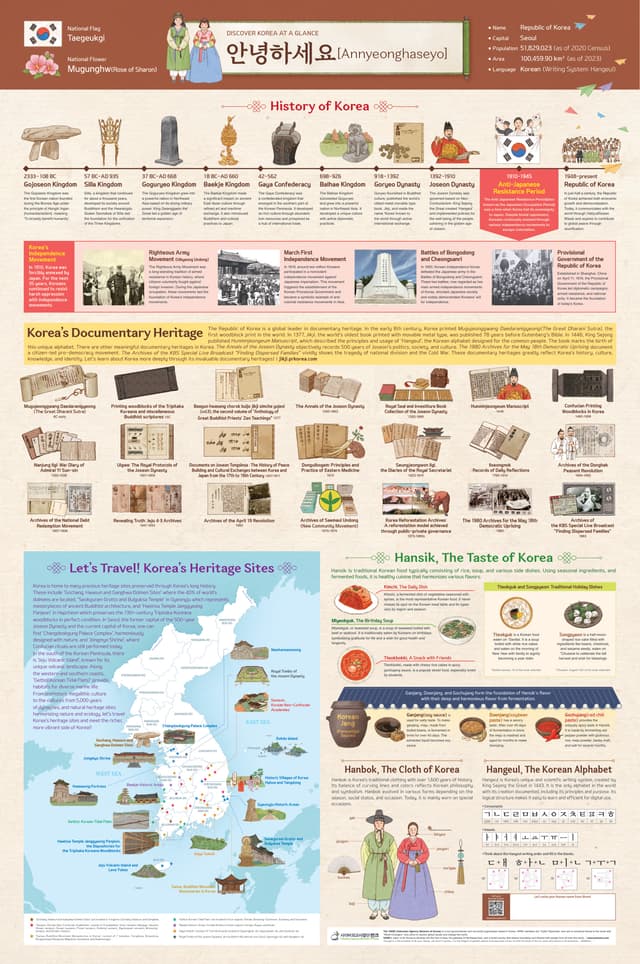
한류스타 엽서 세트는 세계인이 사랑하는 한류의 뿌리가 된 한국의 문화 아이콘 12가지를 소개하는 엽서다. 세계 최고(最古) 금속활자본 직지를 비롯해 고려청자, 한복, 한지, 택견, 태권도, 김치, 인삼, 울릉도와 독도, 탈춤, 재외동포까지 다양한 한국 문화를 담았다.
EnglishThe Hallyu Star Postcard Set introduces 12 cultural icons of Korea that became the roots of Hallyu, the Korean Wave loved by people around the world. The set features a wide range of Korean culture, including Jikji, the world's oldest book printed with movable metal type, Goryeo celadon, hanbok (traditional Korean clothing), hanji (traditional Korean paper), Taekkyeon, Taekwondo, Kimchi, ginseng, Ulleungdo and Dokdo, Talchum, and overseas Koreans.
자료 원고 · English
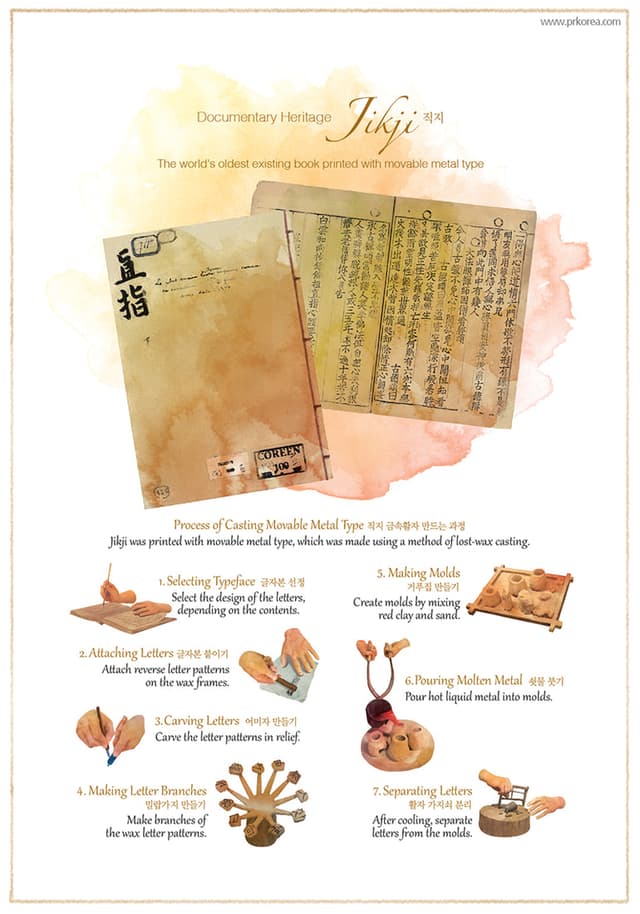
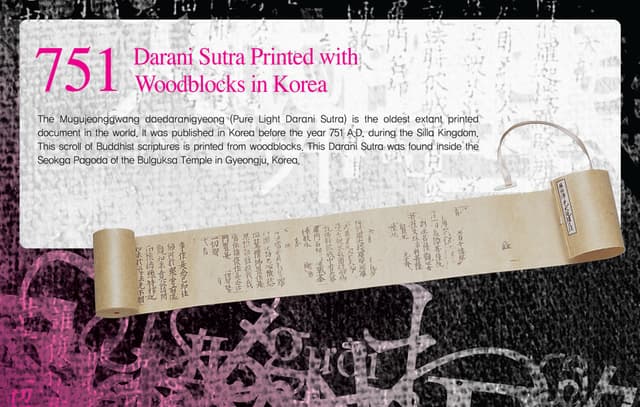
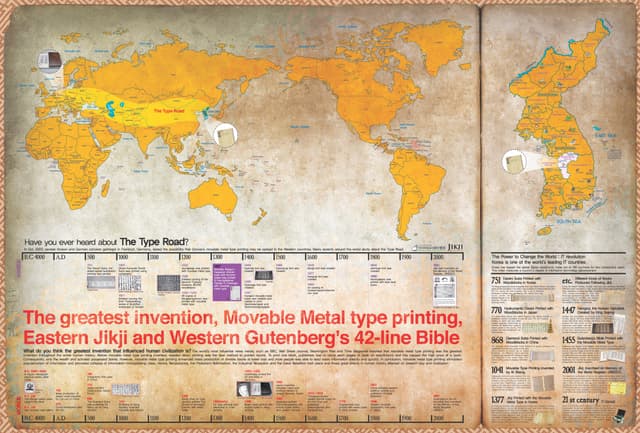
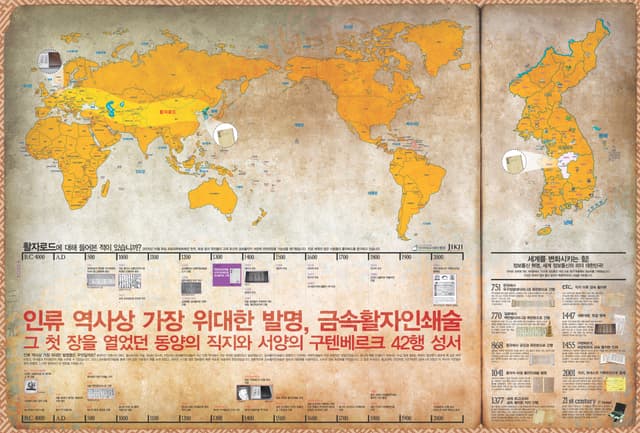
Jikji (Baegun Hwasang Chorok Buljo Jikji Shimche Yojeol), the oldest movable metal type print in the world, was printed at the Heungdeoksa Temple of Cheongju City during the 1377 Goryeo Dynasty. After the France–Korea Treaty was signed in 1886, Collin de Plancy, the first French ambassador to work in Korea, brought Jikji to France as his collection. In 1911, Henry Vever purchased Jikji for 180 francs at an auction and later donated it to the National Library of France where Jikji still resides today. In 2001, Jikji was globally recognized for its value and was designated as UNESCO Memory of the World. UNESCO established the Jikji Memory of the World Prize in 2004. The prize is awarded to an individual or organization contributing to the preservation and accessibility of documentary heritage, including the National Library of the Czech Republic, The Austrian Audiovisual Research Archive, and the National Archive of Malaysia.
Goryeo celadon, the epitome of scientific technology, cultural competency, and the artistic spirit of ancestors, is the representative heritage of the Goryeo Dynasty and a world-class masterpiece.
Goryeo celadon is manufactured in 8 stages: ①Base material preparation, ②Shaping, ③Pattern decoration, ④Dehydration, ⑤Bisque firing, ⑥Glaze application, ⑦Glaze firing, and ⑧Screening defective products.
During the mid-Goryeo Dynasty, the inlaying technique, previously only used in najeon chilgi (lacquerware inlaid with mother-of-pearl) and metal craft, was implemented in celadon, becoming the unique technique of Goryeo celadon.
Various forms of Goryeo celadon are registered as National Treasures of Korea.
Hanbok is the beautiful traditional clothing of Korea. Unlike other countries’ one-piece traditional clothing, hanbok consists of two pieces of clothing with jeogori (top) and either a chima (skirt) for women or baji (trousers) for men. Design differs by formal and daily setting, and also seasonally.
Koreans traditionally wear hanbok for national holidays and feasts. But recently, Korean palaces are offering free admission to visitors wearing hanbok, acknowledging many Korean and foreign visitors to tour Korean palaces wearing hanbok. Hanbok is also increasingly worn in daily life.
Hanbok (Hanbok Lifestyle) is an important medium of respect and courtesy with a long and continuing history recorded in many Korean heritages and documents. In 2022, Hanbok (Hanbok Lifestyle) was designated as the National Intangible Cultural Heritage.
Hanji is a durable and strong paper made from Broussonetia trees. It is also called Baekji, ‘a hundred paper’, describing its handmade process of 99 touches with a hundredth finishing touch of the artisan.
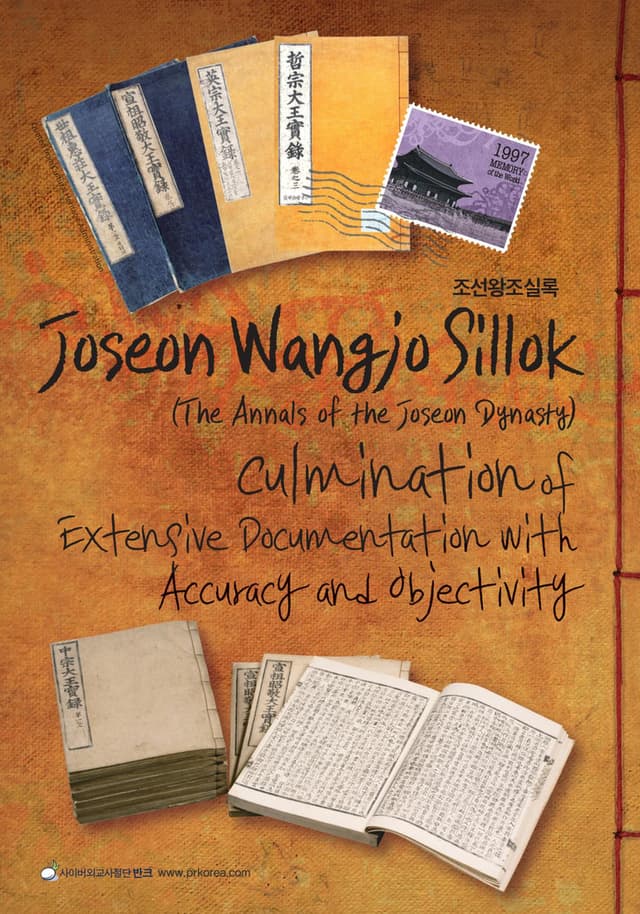
In 2005, Hanjijang, the craftsman of traditional Hanji making, was designated as the Korean National Intangible Cultural Heritage to encourage the proper preservation and succession of Hanji making. Many Korean Memory of the World, including ‘Jikji’, ‘Hunminjeongeum Manuscript’, and ‘The Annals of the Joseon Dynasty’, are made of Hanji, allowing them to be preserved and read in the present days. Hanji not only contributed to the preservation of Korean documentary heritages but also is actively used in many heritage restorations around the world.
Taekkyeon is the first Korean martial art to be designated as the Korean National Intangible Cultural Heritage in 1983. In 2011, it was recognized globally as the first martial art to become the UNESCO National Intangible Cultural Heritage. As shown in Hanbok(Cheollik), the uniform of Taekkyeon, Taekkyeon uses pure Korean words as technical terms to convey true Korean tradition. Taekkyeon teaches the value of ‘consideration’, focusing more on defensive skills than attacks. It promotes social unity and improves trainee’s health and mental well-being. Taekkyeon appears in ‘Dae kwae do’, a genre painting by Shin Yun-bok during the Joseon Dynasty, illustrating how Korean ancestors practiced the martial art throughout Korean history.
Taekwondo is an internationally recognized sport modernizing Korean traditional martial arts. Today, more than 100 million people practice Taekwondo together.
Taekwondo uses bare hands and feet to attack and defend. It accentuates both physical and mental training alongside the importance of respect.
Taekwondo was selected as one of the official Olympics sports in 2000. People around the globe overcome the barriers of language, race, history, and culture to become one with Taekwondo.
Kimchi is the traditional fermented food of Korea, excellent in both nutrients and taste.
『Health』, an American health magazine, selected Kimchi as one of the’ World's Five Healthiest Foods.’
‘Kimjang’, the cultural event of making and sharing Kimchi, illustrates the identity of Koreans. Kimjang was designated as UNESCO National Intangible Cultural Heritage in 2013. November 22nd is ‘National Kimchi Day’, celebrating food as a national day for the first time. It represents Kimchi with each (1) one(1) of ingredients coming together to create 22 signs of effectiveness. Kimchi Day is celebrated not only in Korea but also around the globe.
Insam is a miraculous medicine for the prevention and cure of various diseases.
Korean insam is effective at immune boost, fatigue recovery, strengthening bone, and Alzheimer's disease prevention. It is especially known as one of the best in the world since the Goryeo Dynasty.
Insam has been cultivated all around the Korean peninsula since early history. The effectiveness and cultivation of insam can be found in various documents from the Joseon Dynasty. Today, insam continues to be harvested by a succession of techniques. In 2020, ‘Cultivation of insam and its medicinal application’ is designated as the Korean National Intangible Cultural Heritage.
On March 1st, 1919, 2 million Koreans cried out hurray for the independence of Korea against Japanese Imperialism. “We hereby declare that Korea is an independent state and that Koreans are a self-governing people. We proclaim this fact to all nations to reaffirm the great truth that all humans are equal, so that our descendants may forever enjoy their rights to live as an autonomous people.” The March First Declaration of Independence, in which Koreans voiced their autonomous will toward freedom and independence, changed world history. Many people strove for the independence of Korea. Alongside Korean men, women, children, and teens, many foreign independence activists from the United States, United Kingdom, France, China, Japan, and more raised their voices and fought together for the independence of Korea.
Do you know about Ulleungdo and Dokdo, two beautiful islands located far East of the Korean peninsula?
Ulleungdo is a pentagonal volcano island with its highest mountain, Seonginbong, in the middle. The island is surrounded by the beautiful emerald sea with many tourist attractions including Gwaneumdo, and Nari Basin. Visitors can also enjoy delicious foods such as squid, garlic leaves, and pumpkin malt candy.
Dokdo is composed of East Island, West Island, and 89 annexed islands. The distance between Ulleungdo and Dokdo is 87.4km. On a clear day, you can see Dokdo with bare eyes from Ulleungdo. This fact is also recorded in the 1454 Sejong Sillok Jiriji (Geographical Records in the Annals of King Sejong). More than 2000 wild species including plants, insects, birds, and endangered species reside in Dokdo. Since 512 when Silla Kingdom incorporated the marine nation Usanguk, Dokdo has been historically, geographically, and internationally legal Korean territory.
Korean Talchum, designated as UNESCO National Intangible Cultural Heritage in 2022, is a synthetic art incorporating dance, song, and drama. Various forms of masks each representing different classes, genders, and occupations including the aristocrat, wife, scholar, monk, and butcher, serve as a great historical source on traditional social life. Masks also have different characteristics and shapes that differ by region, symbolizing each region’s cultural identity. Talchum is a community heritage both criticizing things to be criticized and respecting each other to become one. The stage only required an empty space where actors and audiences could interact freely. The interaction of actor and audience in the same space is another characteristic of Talchum. Korean Talchum highlights the value of universal equality and promotes outstanding Korean traditional culture to the world.
Since the first official immigration to Hawaii, around 7.5 million overseas Koreans reside worldwide today. Overseas Koreans strived across the globe for independence, to overcome economic crises, or for the successful hosting of the Olympics.
They also aimed to designate many Korea-related national days to promote Korea worldwide.
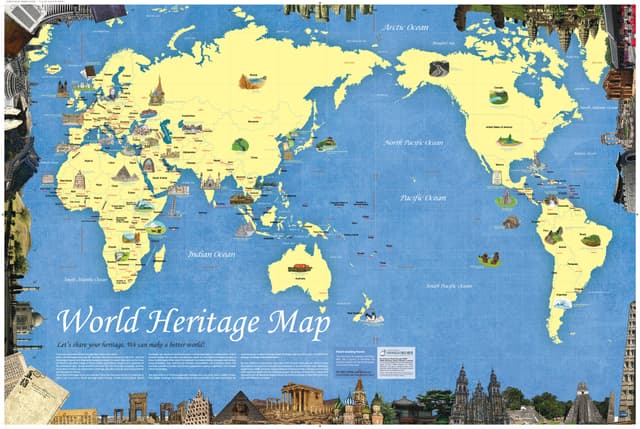
Koreans overseas worked to designate Kimchi Day, Hangeul Day, Hanbok Day, Taekwondo Day, and Jikji Day in many countries including the United States, Brazil, Argentina, and the United Kingdom.
7.5 million overseas Koreans came together to shape today’s developed Korea.
더 보기 ▾