홍보물
한국관광 지도카드 (2010)
Korea Tourism Map Cards (2010)
한국어
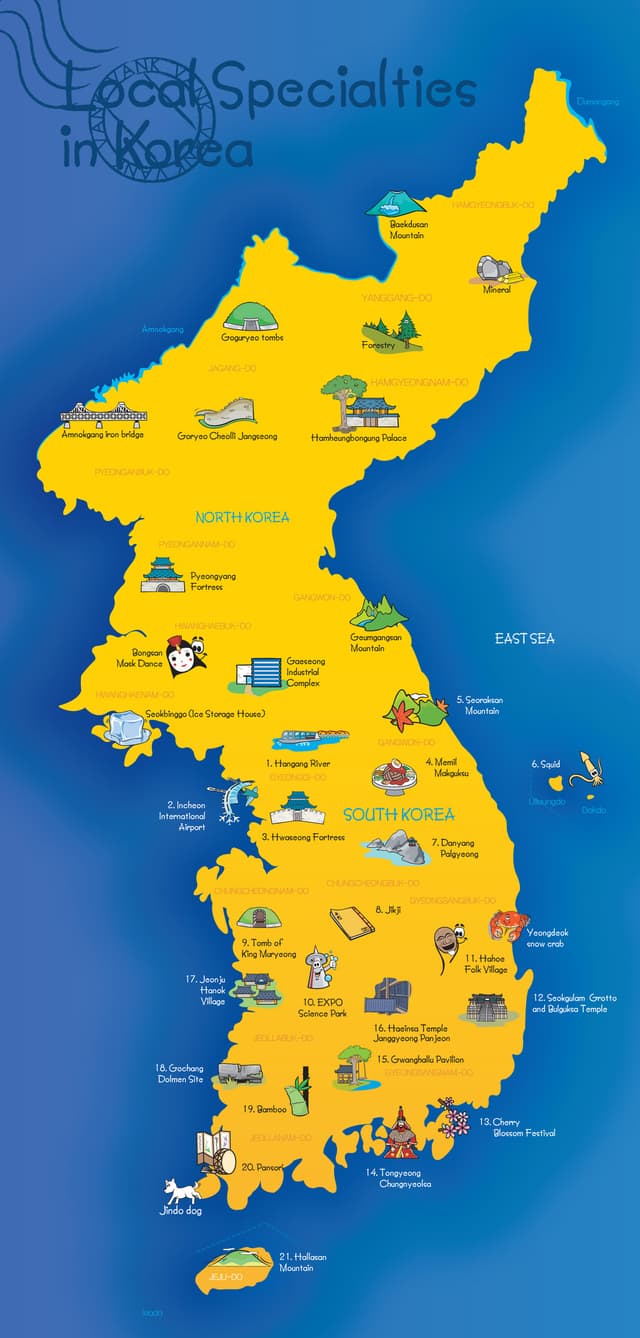
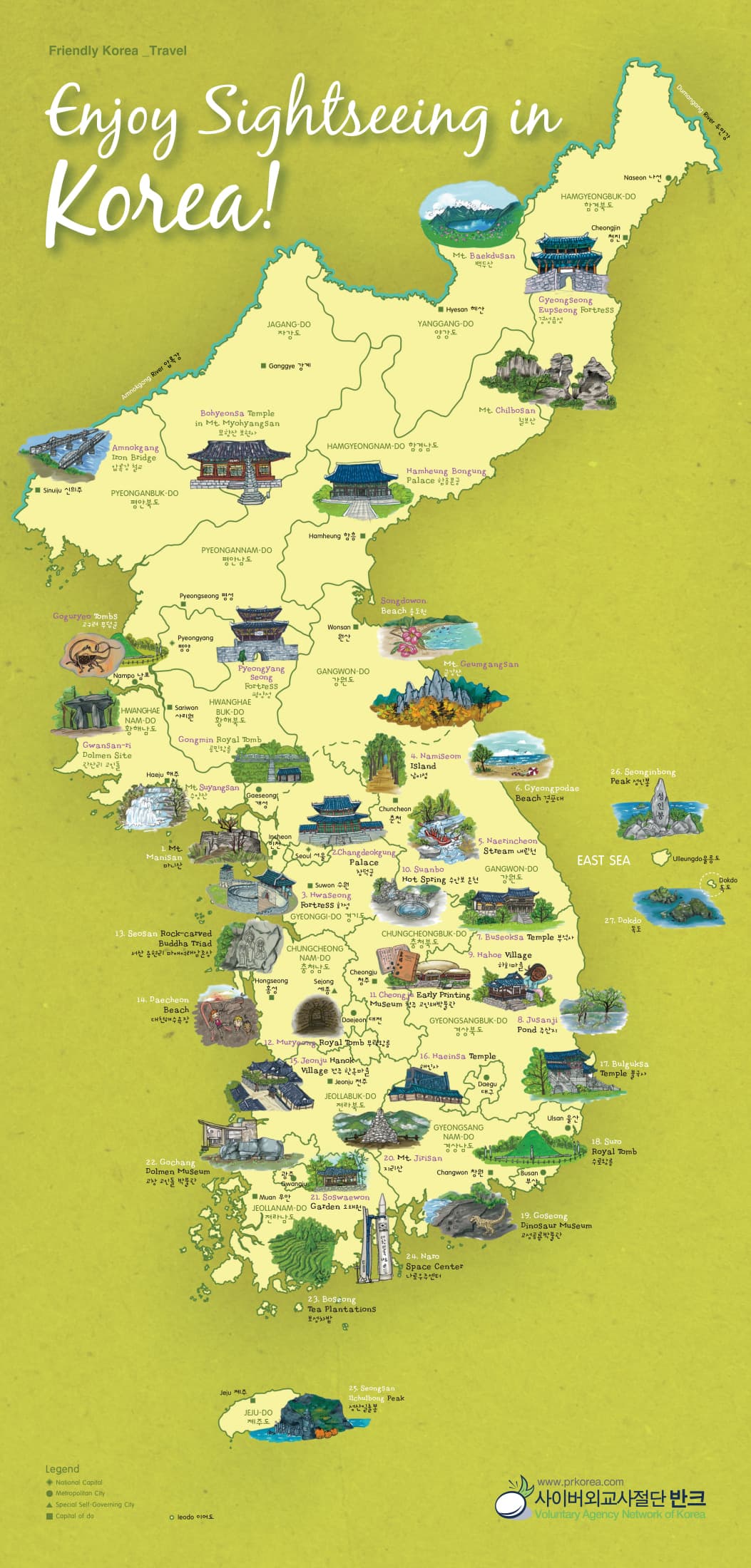
관광한국지도카드는 남북한 관광지 40곳을 한국지도와 함께 소개하는 홍보물이다. 남한 관광지 27곳에는 뒷면에 간략한 설명을 더했으며, 고조선 참성단, 유네스코 세계유산 화성, 한류로 유명해진 남이섬, 독도 등 다양한 관광지를 퍼즐과 함께 소개한다.
EnglishThe Korea Tourism Map Card is a promotional item that introduces 40 tourist sites in North and South Korea alongside a map of Korea. For the 27 South Korean sites, a short description is added on the back. It presents a variety of destinations through a puzzle, including Chamseongdan from Gojoseon, Hwaseong Fortress (a UNESCO World Heritage site), Namiseom Island, made famous by the Korean Wave, and Dokdo.
자료 원고 · English
Enjoy Sightseeing in Korea
1. 마니산/Mt. Manisan
Mt. Manisan, 469m high, of Ganghwado Island in West Sea has a large numbers of cultural relics. The most well-known relic is Chamseongdan, a stone altar. It is said that Dangun Wanggeom, the founder of Gojoseon (2333-108 B.C.), the first kingdom of Korea, held sacrificial rites to heaven here.
2. 창덕궁/Changdeokgung Palace
Changdeokgung is one of the palaces of the Joseon Dynasty (1392-1910). It is famous for its well-preserved buildings, varied pavilions, and beautiful rear garden called Biwon (Secret Garden). Changdeokgung was included on the UNESCO’s World Heritage List in 1997.
3. 화성/Hwaseong Fortress
Hwaseong is a fortress that was constructed in the 18th century during the reign of King Jeongjo (1752~1800) of the Joseon Dynasty. With its scientific method of construction, Hwaseong is highly valued as a cultural heritage and seems to harmonize well with its modern surroundings.
4. 남이섬/Namiseom Island
Namiseom Island is known to many tourists due to its proximity to Seoul and its beautiful natural scenery. Places such as Metasequoia Lane, Ginko Tree Lane, White Pine Tree Lane, are popular spots on the island. Namiseom Island is the place where Winter Sonata, one of the most famous Korean dramas, was filmed. The island is an extremely popular destination among international tourists.
5. 내린천/Naerincheon Stream
Naerincheon Stream is located in Inje-gun, Gangwon-do Province. Gangwon-do is known for its beautiful, natural features such as the pristine Naerincheon Stream. Naerincheon Stream is a representative rafting site that is full of tourists during the summer.
6. 경포대/Gyeongpodae Beach
The East Sea, with its clear water, is one of the summer resorts where Korean people love to go. Gyeongpodae Beach is the most popular beach along the East Sea. Since it is close to downtown Gangneung and has a long sandy beach, it is crowded with many visitors in the summer.
7. 부석사/Buseoksa Temple
Buseoksa, one of the most famous Buddhist temples, was built by Priest Uisang (625~702) after he received orders from the King during the Silla Kingdom (57 B.C. – 935 A.D.). Muryangsujeon, the main hall, has been designated as the 18th national treasure and is one of the oldest known wooden buildings in Korea. The view from the temple is simply breathtaking.
8. 주산지/Jusanji Pond
Jusanji is a pond that was made in 1721 during the Joseon Dynasty for agricultural purposes. More than twenty wild willow trees, the roots of which are partially submerged in the water, give the pond a sort of mystical beauty. The place is popular among tourists and photographers.
9. 하회마을/Hahoe Village
Hahoe Village is a Korean folk village, where the customs and traditions of the Joseon Dynasty have been well preserved. In July 2010, Hahoe Village, along with Yangdong Village in Gyeongju, was registered as a UNESCO World Heritage. Hahoe Village is also well known as the birthplace of the Hahoe Byeolsingut Mask Dance Drama.
10. 수안보 온천/Suanbo Hot spring
Suanbo Hot Spring is Korea’s first naturally welling hot spring. Its history dates back to the Joseon Dynasty , when it was visited by the nation’s kings. Many hotels and condos are located nearby, and festivals like the Hot Spring Festival give visitors plenty to do.
11. 청주 고인쇄박물관/Cheongju Early Printing Museum
Jikji, printed in 1377, is the oldest extant movable metal type printed book in the world. The Cheongju Early Printing Museum was constructed on the site of the Heungdeoksa Temple where Jikji was published. The Museum displays relics excavated at the temple site, along with printing tools, and ancient Korean books printed with woodblocks and movable metal types.
12. 무령왕릉/Muryeong Royal Tomb
The Muryeong Royal Tomb is the tomb where King Muryeong (462~523) of the Baekje Kingdom (18 B.C. – A.D. 660) and his queen are buried. It was found in 1971 in Gongju, one of the capitals of Baekje. Many remains from the Baekje Kingdom, including a gold crown, bracelets, and accessories, were excavated from the tomb.
13. 서산 용현리 마애여래삼존상/ Seosan Rock-carved Buddha Triad
Seosan Rock-carved Buddha Triad consists of three images of Buddha carved on a cliff in a valley of Gaya Mountain in Yonghyeon-ri, Seosan. It was created in the late Baekje period (18 B.C.-A.D.660). Due to the presence of a smile on the face of Buddha, it is widely known as the “smile of Baekje.” The smile looks different, depending on the angle of the light.
14. 대천해수욕장/Daecheon Beach
Daecheon Beach, located along the West Sea, is the vast beach 3.5km long and 100m wide. Every summer, it is the venue of the Boryeong Mud Festival is held here. The festival is one of the most famous festivals in Korea; tourists can experience many different contests and mud massages.
15. 전주한옥마을/Jeonju Hanok Village
Jeonju Hanok Village features 700 Hanok (Korean traditional houses). You can experience the traditional Korean Hanok lifestyle, as well as various aspects of Korean traditional such as Pansori, Korean dance and musical performances, and Korean paper art.
16. 해인사/Haeinsa Temple
Haeinsa Temple, located in Gaya Mountain, Hapcheon, is known for preserving Haeinsa Temple Daejanggyeongpan Printing Blocks, also known as the Tripitaka Koreana. The Tripitaka Koreana is recognized as the biggest complete collection of Buddhist texts in the world. The building where these texts are kept was scientifically built to safely preserve them.
17. 불국사/Bulguksa Temple
Bulguksa Temple, constructed during the Silla Kingdom (57 B.C. – A.D. 935) in the 8th century, is an internationally recognized masterpiece of Buddhist arts. This temple features national assets including Buddhist monuments and images, and unique Buddhist temple buildings.
18. 수로왕릉/Suro Royal Tomb
The Gaya Kingdom (42 – 562) was a federation of several small states centered on the Nakdong River delta. The Gaya Kingdom is famous for its extensive ironwork. The Suro Royal Tomb in Gimhae is the tomb of King Suro, founder of Gaya; the tomb of the queen (princess of India) is located nearby.
19. 고성 공룡박물관/Goseong Dinosaur Museum
The Goseong Dinosaur Museum was built in Sangjogam County Park in Goseong, a site that is famous worldwide for its fossilized dinosaur footprints. Main exhibits include replicas of dinosaur bones and Sangjogam, the series of fossilized footprints trailing along the coast.
20. 지리산/Mt. Jirisan
Mt. Jirisan is the second highest mountain of South Korea; its highest peak, Cheonwangbong (‘bong’ meaning ‘peak’), is 1915m high. The 25.5㎞-long hiking trail from the west end of Jirisan (Mt.Nogodan) to the east end (Cheonwangbong Peak) is the most popular hiking trail on the mountain.
21. 소쇄원/Soswaewon Garden
Soswaewon Garden, which means “refreshingly clean garden,” was built by the scholar Yang San-Bo (1503~1557) during the Joseon Dynasty when he traveled out into the country. It is known as the best private garden of the Joseon Era, with traditional buildings like the Gwangpunggak Pavilion, and natural flora like trees, shrubs, and bamboo.
22. 고창 고인돌 박물관/ Gochang Dolmen Museum
Forty percent of the world’s dolmens are distributed throughout the Korean peninsula; among them, Gochang, Hwasun and Ganghwa Dolmens have been registered as UNESCO World Heritages. The Gochang Dolmen Museum was built at the site of the Gochang Dolmens, exhibiting more than 440 Dolmens of various shapes and sizes as well as different relics of the Bronze Age.
23. 보성차밭/Boseong Tea Plantations
Boseong fields have good natural drainage that makes them perfect for the cultivation of tea. Many tea plantations, including Korea’s largest Daehan Tea Plantation, are located here. The Tea Festival is held annually, and the Boseong hills full of green tea are frequently featured in movies and TV dramas.
24. 나로우주센터/Naro Space Center
The Naro Space Center was completed in June 11th, 2009, making Korea the 13th country in the world to have its own space center. There is a launching pad as well as a center that exhibits rockets and satellites.
25. 성산일출봉/Seongsan Ilchulbong Peak
Jeju Island is an international tourist destination that was named a Biosphere Reserve in 2002, a UNESCO World Natural Heritage Site in 2007, and part of the UNESCO Global Geoparks Network in 2010. Seongsan Ilchulbong Peak, one of the most scenic places on Jeju Island, is a volcano with a huge crater at the top. Many visit to see its famous sunrise.
26. 성인봉/Seonginbong Peak
Seonginbong Peak, located in the center of Ulleungdo Island, is mountain that is 984m high. The peak is famous for its hiking course, with diverse rare plants. The primeval forest located near the peak has been designated as a natural monument.
27. 독도/Dokdo
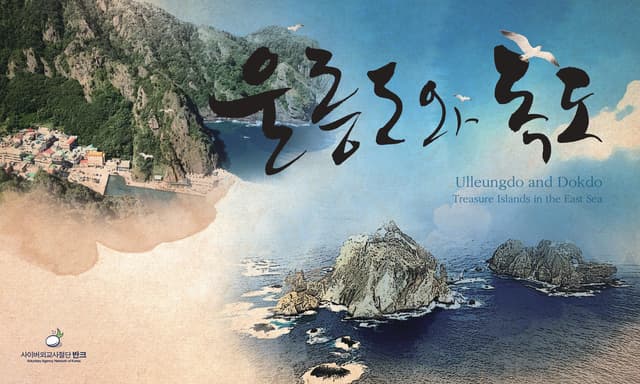
Dokdo is in the eastern reaches of Korean territory. Though small, Dokdo is the most meaningful island in Korea.
더 보기 ▾