홍보물
local Specialties in Korea 지도카드 (2007)
Local Specialties in Korea Map Cards (2007)
한국어
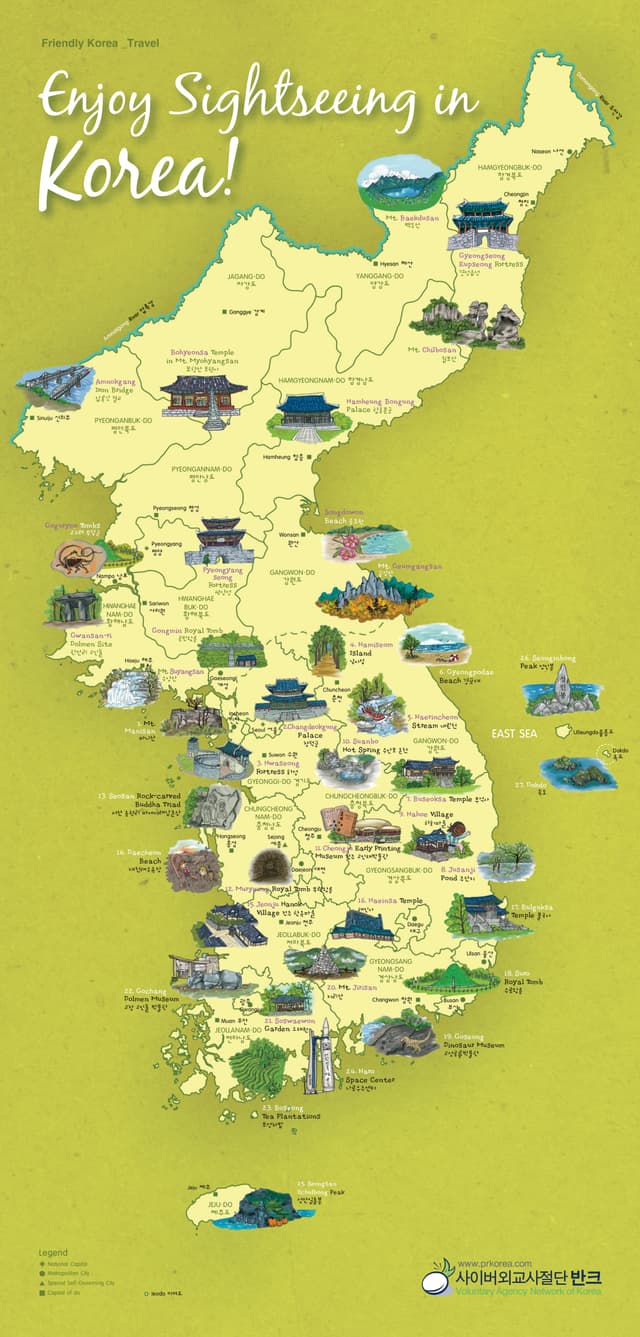
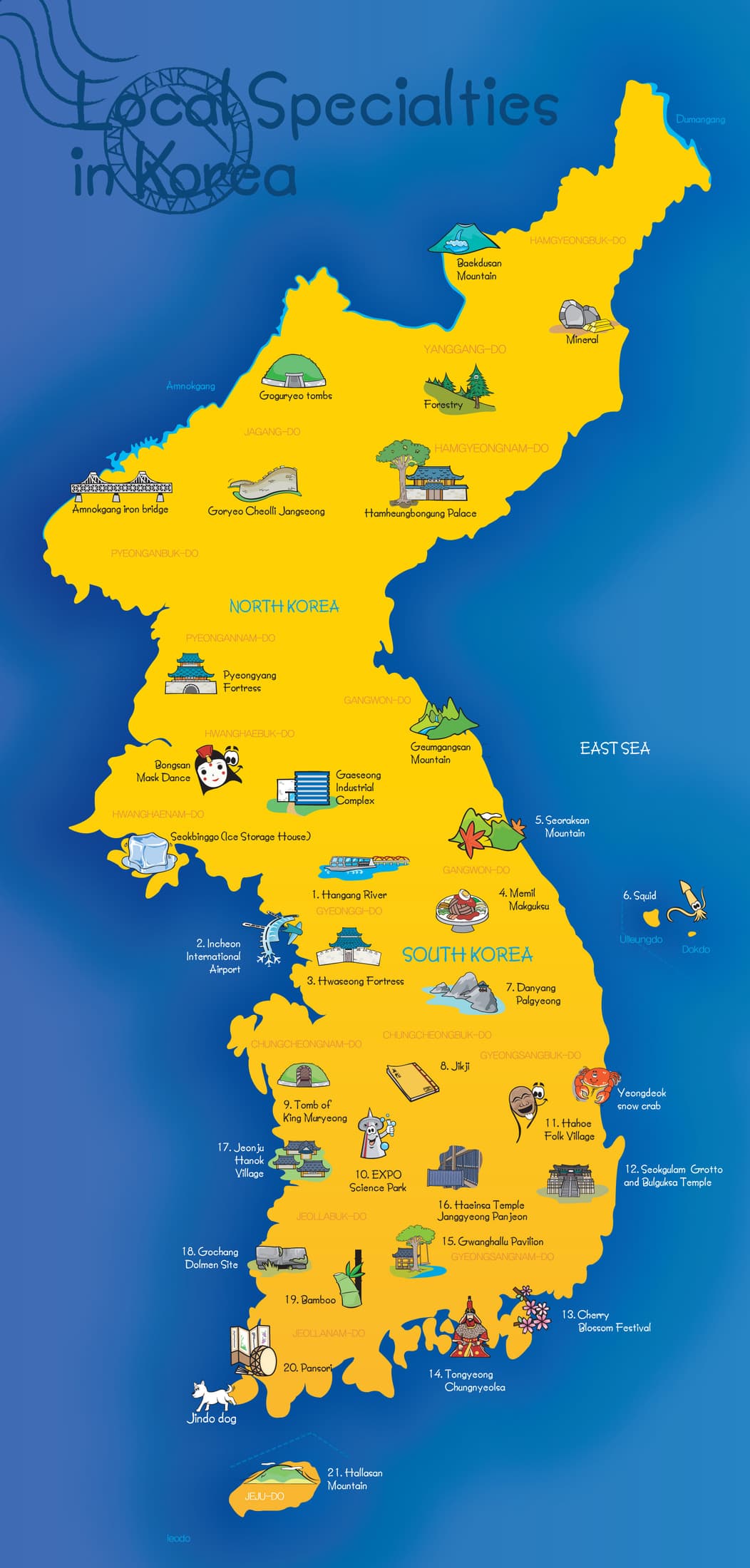
local Specialties in Korea 지도카드는 한국 각 지역의 문화와 관광지, 특산물을 소개하는 지도 카드다. 서울 한강·창덕궁, 강원도 설악산·경포대 등 21개 지역 42개 명소를 담았으며, 그림을 들추면 짝을 이루는 정보가 나오는 방식으로 지역을 재미있게 소개한다.
EnglishLocal Specialties in Korea Map Cards is a set of map cards that introduce the culture, tourist spots, and local specialties of each region in Korea. It covers 42 spots in 21 regions, including the Hangang River and Changdeokgung Palace in Seoul, and Seoraksan Mountain and Gyeongpodae Pavilion in Gangwon-do. Each card has a picture that flips open to reveal matching information, making it a fun way to learn about each region.
자료 원고 · English
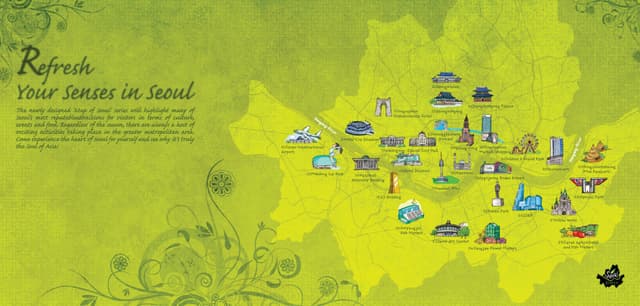
1. Hangang River
The Hangang River runs through the heart of Seoul, the capital city of Korea. Riverside Parks along the banks of the Hangang provide a resting place and various cultural events such as a flower festival, a film festival, a fireworks festival, and marathon throughout a year, so lots of people enjoy visiting there.
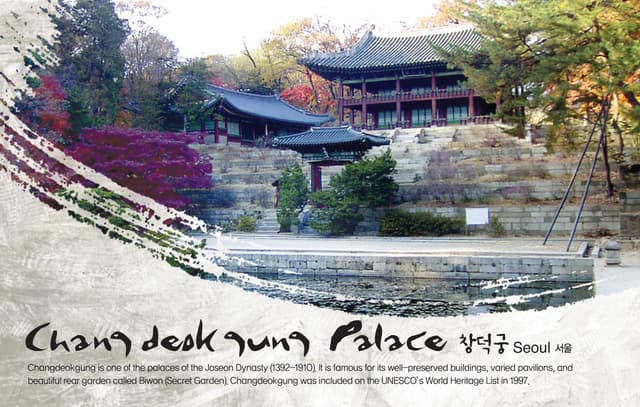
1-1 Changdeokgung Palace
Changdeokgung Palace is one of the palaces of Joseon dynasty (1392-1910), which is famous for the well-preserved buildings, varied pavilions, and a beautiful rear garden called Biwon(Secret Garden). Changdeokgung was inscribed on UNESCO’s world heritage list in 1997.
2. Incheon International Airport
Incheon International Airport opened in 2001 is a gateway to Korea, and gets high marks in the annual international airport evaluation every year with its high quality of the facilities and the services. The goal of the Incheon International Airport is to become an international hub airport in the 21st century that people and goods from all over the world go through.
2-1 Hwamunseok Mat
The rush is a unique Korean industrial crop used to create various kinds of living objects of craftwork. Especially the white rush is only grown in Ganghwa region. Hwamunseok is a mat woven with flower or animal patterns after dying the white rush. The artistic value of Hwamunseok mat has been widely recognized due to its elaborate designs.
3. Hwaseong Fortress
Hwaseong is a fortress constructed in 18th century during the reign of King Jeongjo, the 22nd King of Joseon dynasty (1392-1910). With its scientific method of construction, it is high valued as a cultural heritage. You can find its majestic figure harmonized with the modern city when you visit Suwon.
3-1 Icheon Ceramics
Icheon is one of the major places of Korean ceramic art, and it annually hosts the Ceramics Festival. There are several Ceramic Museums where you can appreciate the Korean Ceramics from the past to the present and the Ceramics Village where you can buy or make the ceramics.
4. Memil Makguksu-buckwheat noodles
Memil Makguksu(buckwheat noodles) is a native local food of Gangwon-do putting buckwheat noodles into the clear Kimchi soup. It has plain and delicate taste. You can enjoy the best taste of Memil Makguksu when it is cold especially during hot summer days.
4-1 Potatoes
Potatoes are the specialty of Gangwon-do. People in Gangwon-do has developed and enjoyed many foods made of potatoes such as potato fan fried food, potato cakes, and potato noodles, and now the foods are widely enjoyed by Koreans in other regions.
5. Seoraksan Mountain
Seoraksan Mountain is one of the main mountains of Korea. The highest peak of the mountain, Dacheongbong, is 1708 meters, and there are many famous peaks, valleys, and waterfalls. It has beautiful scenery all the year round, and many rare animals and plants inhabit there.
5-1 Gyeongpodae Beach
East Sea which boasts the clear water is one of the summer resorts where Korean people love to go, and Gyeongpodae is the most popular beach among them. Since it is close to the Gangneung downtown and has a long sand beach, it is crowded with many visitors in summer.
6. Squid
Koreans enjoy eating squid in many different ways, such as raw, frozen, salted, and other ways. Ulleungdo Island in the East Sea is famous for its catch of squid and the high quality of the squid. The dried squid in Ulleungdo Island is especially popular among Koreans for the snack.
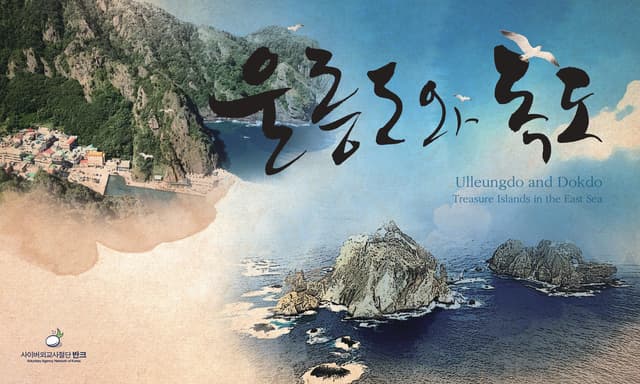
6-1 Dokdo Island
Dokdo Island is in the eastern reaches of Korea territory. Though small, Dokdo Island is the most meaningful island in Korea.
7. Danyang Palgyeong
Danyang Palgeyeong refers to the 8 scenic wonders centering around the Danyang region. They are boasting their scenic beauty, which were appreciated by many scholars and painters in Joseon dynasty (1392-1910) and chosen to be the subject matters of their works.
7-1 Taekgyeon
Taekgyeon is one of the Korean traditional martial arts. Its movements are gentle like dancing and mainly use footwork. Chungju is the hometown of Taekgyeon, and hosts the world martial arts festival every year.
8. Jikji
Jikji is the oldest extant movable metal printed book that was printed in 1377. It is valuable documentary heritage that shows the development of Korean printing. Cheongju Early Printing Museum was constructed on the site of Heungdeoksa Temple where Jikji was published. In 2001, UNESCO recognized this book’s value and listed on Memory of the World Register.
8-1 Jeongipumsong Pine Tree
Pine trees are one of Koreans’ favorite trees and have been used for medicinal or edible purposes. Sejo, the 7th King of Joseon dynasty (1392-1910), even gave the pine trees in Songnisan Mountain a government position, Jeongipum, the rank of minister. It also has a good figure counted as a specialty of Songnisan Mountain.
9. Tomb of King Muryeong
The Tomb of King Muryeong is the tomb where the King Muryeong, the 25th King of Baekjae Kingdom (18 B.C. ~ A.D.660), and his queen are buried. It was found in Gongju, one of the capitals of Baekje, in 1971. Many remains of Baekje including a gold crown, bracelets, and accessories were excavated in the tomb.
9-1 Walnut Cookies
Walnut Cookies are the cookies shaped like a walnut, the specialty of Cheonan. They are filled with the mushy red-bean, and taste soft and sweat. They originated from Cheonan, but now you can find them anywhere in Korea. They are a favorite snack among tourists driving on highways.
10. EXPO Science Park
EXPO Science Park was constructed in commemoration of the international exposition held in 1993 in Daejeon. There are many research institutions and educational institutions leading Korean science, such as Daedeok Research Complex and the KAIST (Korea Advanced Institute of Science and Technology).
10-1 Insam
Insam (ginseng) is a world-famous medicinal plant, which helps prevent or cure various diseases. Korea is one of the major plantations of Insam. Especially the Goryeo Insam grown in Korea, which has high quality and efficacy, has been exported to neighboring countries such as China and Japan.
11. Hahoe Folk Village
Hahoe Folk Village is a traditional village that you can look around Korean traditional houses and the culture during Joseon dynasty (1392-1910). It is well-known for the Hahoe Byeolsingut Tallori(Mask Dance Drama) incorporating the humor and satire of the common people, and the Hahoe masks used in the play were designated a National Treasure.
11-1 Garlic
Garlic is a major ingredient used in almost all Korean dishes. It helps people stay healthy and prevent cancer. Uiseong has been growing garlic for a long time and it produces the largest amount of native garlic in Korea.
12. Seokgulam Grotto and Bulguksa Temple
Seokgulam Grotto and Bulguksa Temple constructed during Silla Kingdom (57B.C.-A.D. 935) in 8th century are internationally recognized masterpieces of Buddhist arts. Seokguram Grotto is well-known for the realistic and elaborate depiction of the Buddhist images. Bulguksa Temple keeps the national assets including monuments and Buddhist images, and the unique Buddhist temple buildings.
12-1 Tumuli Park
Tumuli Park is a park that preserves the 23 burial mounds of Silla Kingdom (57B.C.-A.D. 935). It is located at the center of Gyeongju, the capital of Silla Kindom for 1,000 years. Cheonmachong, one of the burial mounds, is an especially famous tumulus excavated with many relics including the Silla crown, and the inside of the Cheonmachong is opened to the public.
13. Jinhae Cherry Blossom Festival
Flowers such as the forsythias, the azaleas, and the cherry blossoms bloom in spring in Korea, and various festivals are held in this season. Jinhae Cherry Blossom Festival is the most popular one, and the city is crowded with many domestic and foreign tourists who visit the city to see them.
13-1 Dongnae Pajeon
Dongnae Pajeon, the green onion pancake with seafood, is a famous regional food in Busan. After kneading flour and rice flour, put the seafood and green onions, and panfry all he mixed materials. Korean people enjoy it as a snack or an accompaniment of drinks.
14. Tongyeong Chungnyeolsa Shrine
Tongyeong Chungnyeolsa is the shrine dedicated to General Admiral Yi Sun-sin who saved Korea from Japan during Imjin Waeran (Japanese Invasions of Korea, 1592-1598). Joseon was inferior in weapons and force of arms to Japan at that time, but General Yi defeated the enemy with his great tactics and leadership.
14-1 Sangjogam Park
Sangjogam in Goseong, Gyeongsangnam-do is the fossil site with dinosaur footprints found in 1982, and it is counted as one of the world’s 3 biggest sites of dinosaur fossils along with Brazil and Canada. You can see the vividly engraved dinosaur footprints walking along the shoreline.
15. Gwanghallu Pavilion
Namwon is the regional background of the ChunHyang Story, the representative love story of Korea. The main characters, Chunhyang(the heroine) and Yi Mongnyong
(the hero) loved for each other overcoming the difference in social standing, and the Gwanghallu was the place where the two first met, which has a beautiful scenery.
15-1 Jirisan Mountain
Jirisan Mountain is the second highest mountain of South Korea, of which the highest peak, Cheonwangbong (bong means ‘peak’), is 1915 meters high. The mountains extend over three provinces, Jeollanam-do, Jeollabuk-do, and Gyeongsangnam-do. The hiking trail of 25.5 kilometers from Nogodan, the west end, to the Cheonwangbong peak, the east end, is most popular among people who like to hike.
16. Haeinsa Temple Janggyeong Panjeon, the Depositories for the Tripitaka Koreana Woodblocks
The Tripitaka Koreana is recognized as the most massive and complete collection of Buddhist texts in the world. Furthermore, the buildings of Haeinsa Temple Janggyeong Panjeon are the world’s cultural heritage. They were constructed to preserve this collection and the collection has been preserved in it in good shape for a long time.
16-1 Daegu Textile Industry
Daegu is the center of the Korean textile industry, which occupies most textiles exports of Korea. Daegu hosts textile festivals, including the Daegu Collection, Hanbok (Korean Clothing) Fashion Show, and many exhibitions and contests related to textiles every spring and fall.
17. Jeonju Hanok Village
700 Hanoks, Korean traditional houses, are gathered in Jeonju Hanok Village. You can experience the living styles in Hanok as well as various Korean traditional cultures such as Pansori(Korean Opera), Korean dance and musical performances, and Korean paper art.
17-1 Bibimbap
Bibimbap is Korean food that is rice mixed with various vegetables. It is popular both among children and adults. Jeonju is especially famous for its tasty Bibimbap, which has its originality in putting five-different colored vegetables and the seasoned raw meat.
18. Gochang Dolmen Site
Dolmens, one of the creatures of the human megalithic culture, are scattered over Korea. About 2000 dolmens are found in over 85 areas in Gochang region, and Gochang Dolmen Site was inscribed on UNESCO’s world heritage list along with Hwasun and Ganghwa.
18-1 Yeonggwang Gulbi
Gulbi is a dried yellow corvine after preserving it with salt. The Yeonggwang Gulbi caught in Yeonggwang Beopseongpo is most popular among people. It has the outstanding flavor to be served at the King’s table in the Joseon dynasty (1392-1910). It is cooked variously for a fish pot stew, hard-boiled food, a steamed dish, and the baked fish.
19. Bamboo
Bamboo was beloved by Korean scholars for a long time as the symbol of the fidelity and integrity. It is widely used in making furniture, household supplies, and works of art. Damyang region is the major bamboo growing district and has lots of bamboo-related sights such as the Bamboo Museum and the Bamboo festival.
19-1 Gochujang, red pepper paste
Gochujang(red pepper paste) is one of the basic seasonings of Korean food along with Doenjang(soybean paste) and Ganjang(soy sauce). It is made from the red pepper powder, fermented soybeans powder, and the glutinous rice flour. Sunchang region has been well-known for producing tasty Gochujang, and even brings it to the market with the brand name of “Sunchang Gochujang.”
20. Pansori
Pansori is the Korean opera which is a field of Korean traditional music. A Sorikkun(the performer) tells and sings a story standing with a folding fan held in one hand, and a Gosu(a drummer) gives rhythm by beats and chuimsae, verbal sounds. Boseong is the native place of Seopyeonje, one of the famous sects of Pansori in Korea.
20-1 Goryeo Celadon
Goryeo Celadon the representative art work of Korea, was first made during the Goryeo dynasty (918-1392) and has been high valued with its jade green color. Gangjin is the home of Goryeo Celadon and about 50 % of the excavated kiln sites of Goryeo Celadon are located in Gangjin.
21. Hallasan Mountain
Hallasan Mountain which lies the center of Jeju Island is a dormant volcano and the highest mountain of South Korea. Its highest mountain peak is 1,950 meters high. The mountain has a distinguished scenic beauty and various plants from the warm temperate plants to the alpine plants, and so it is called a rich repository of the ecospecies.
21-1 Dolhareubang
Dolhareubang is the symbol of Jeju Island and a stone image made of basalt which is the special feature of the Jeju Island. Dolhareubang is presumed to have played a role of guardian deities in the past. You can see various sizes and shapes of them in Jeju Island.
더 보기 ▾