한국어한국관광엽서는 한국의 유구한 역사와 문화, 아름다운 자연을 품은 한국의 관광지 11곳을 소개하는 홍보물이다. 서울의 창덕궁과 명동을 비롯하여, 동해의 울릉도와 독도까지 전국의 의미있는 관광지를 소개한다. 산이 많고 삼면이 바다로 둘러싸인 지형, 선사시대부터 이어진 역사, 그리고 한류로 대표되는 현대 문화까지, 전통과 첨단이 조화를 이루는 한국의 매력을 담았다.
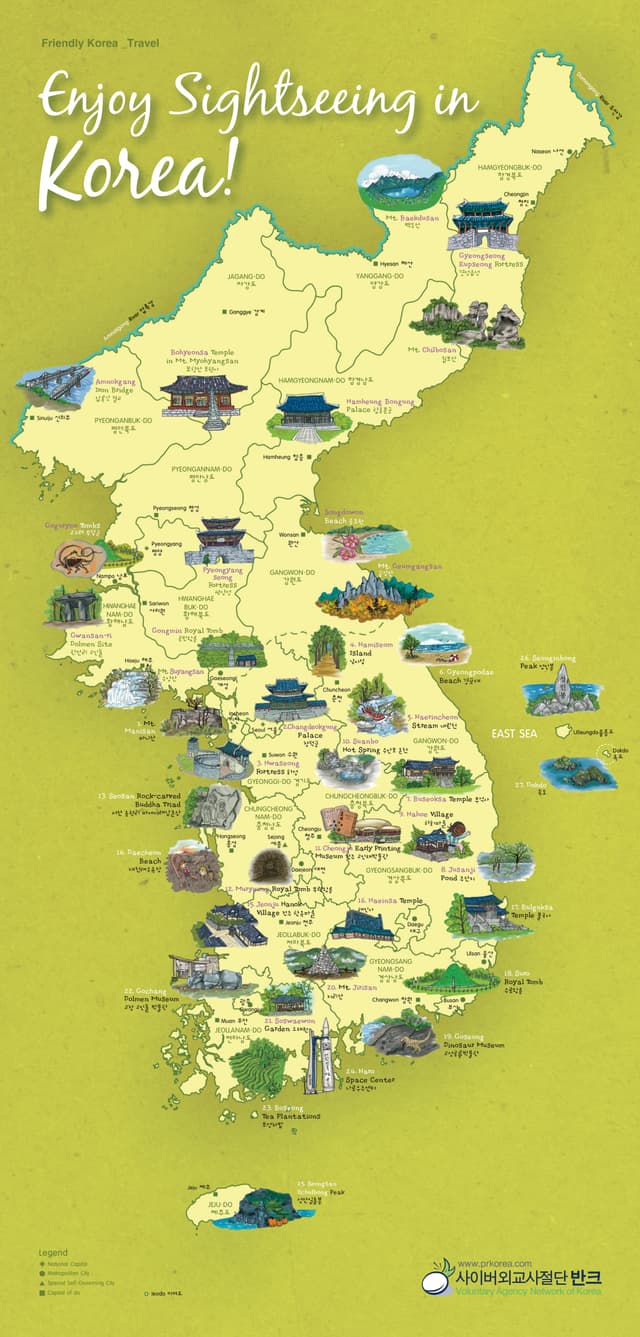
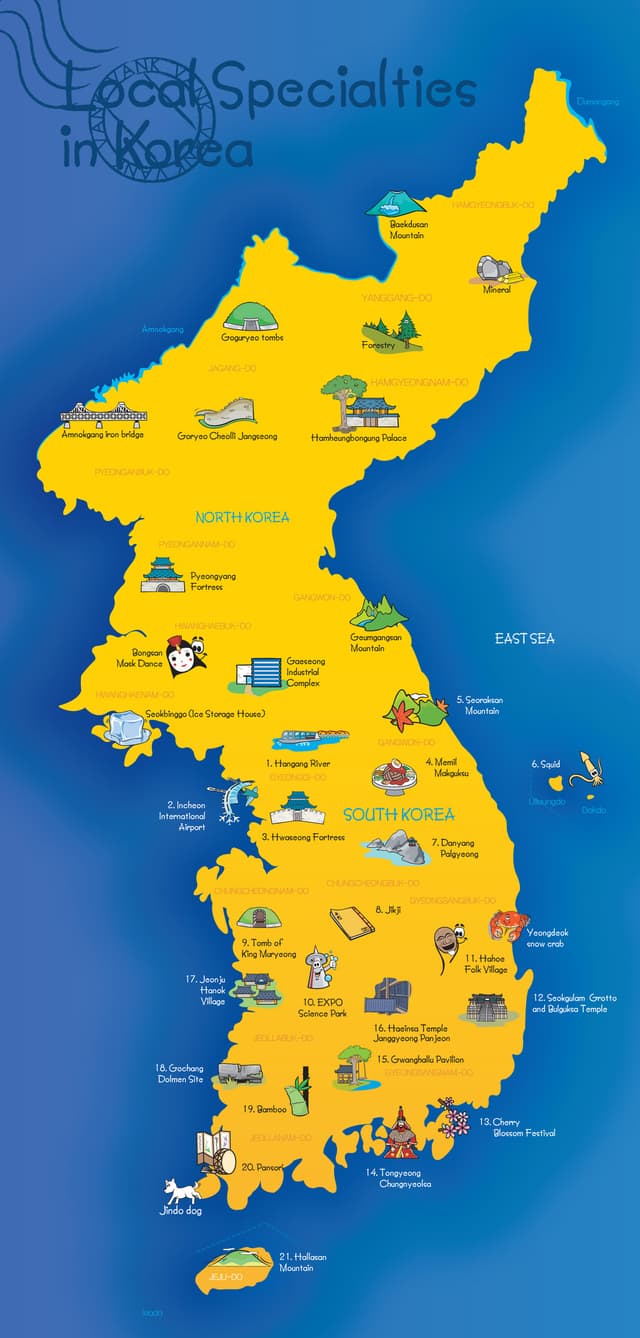
EnglishKorea Tourism Postcards is a promotional collection introducing 11 tourist destinations in Korea that embrace the country's long history, culture, and beautiful nature. From Changdeokgung Palace and Myeongdong in Seoul to Ulleungdo and Dokdo in the East Sea, it presents meaningful tourist destinations across the country. It captures the charm of Korea, where tradition and modernity meet in harmony — from its mountainous landscape surrounded by sea on three sides, to a history reaching back to prehistoric times, to today's culture represented by the Korean Wave (Hallyu).
자료 원고 · EnglishYou are always welcome to Korea!
Thanks to its long history, Korea has rich historical relics and culture along with beautiful natural landscapes.
Korea is a mountainous country where you can see a mountain everywhere, while being surrounded by oceans on three sides. Its history traces back to prehistoric times and ancient kingdoms, and it survived many invasions. Korea is now one of the world’s top economies, and exports its culture, known as Hallyu, to the world.
Korea seeks harmony between human and nature and tradition and high technology. Whatever you expect, Korea will exceed your expectation.
Friends, come to Korea and have fun!
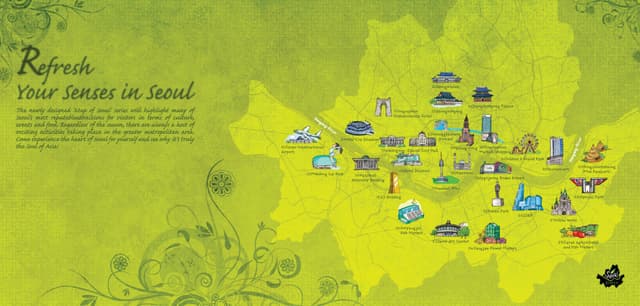
Myeongdong, Epicenter of Korean Fashion
Myeongdong is the epicenter of Korean Fashion. In 1956, Korea’s first fashion show was held in Myeongdong, marking the beginning of Korea’s modern fashion history. Despite many changes, Myeongdong retains its reputation as a fashion mecca. It offers diverse shopping choices, including department stores, local and international brand stores, and independent stores. Fashion leaders from Korea and from around the world are flocking to Myeongdong.
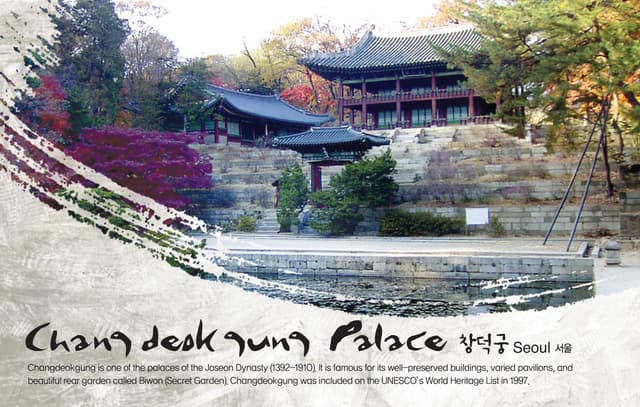
Changdeokgung Palace, Prime Example of Korean Traditional Architecture
Changdeokgung Palace is one of the five remaining palaces from the Joseon Dynasty (1392-1910), which is a prime example of Korean traditional architecture. It was built in 1405 and inhabited by kings for the longest time. Its asymmetrical layout and spacious garden show great harmony with the surrounding landscapes. Harmony between human and nature is a key characteristic of Korean traditional architecture.
Hwaseong Fortress, Expression of Desire for Change
Hwaseong Fortress represents King Jeongjo’s (1752-1800) desire for change. In 1789, King Jeongjo moved the tomb of his father, who died tragically, to Suwon, and built Hwaseong Fortress to develop Suwon into a new town. The fortress was built by combining traditional construction techniques and new scientific knowledge. It shows excellence in its military defense function and unique architecture.
Incheon Open Port, Historic Port of Joseon
Incheon Open Port was opened during the Joseon Dynasty (1392-1910). By opening this port in 1883, Joseon began to actively engage in international trade. Its opening was forced by Japan to serve the interest of foreign powers, including Japan. Today, Incheon hosts the Incheon Port and the Incheon International Airport that connects the world. Incheon has become a hub of international trade and exchange.
Mt. Seorak, Famous Mountain in the Land of Mountains
Mt. Seorak is a famous mountain on the eastern side of Korea. Korea is a mountainous country where you can see a mountain everywhere. A geography book of Joseon, published in 1530, explains the origin of the name Seorak: “Snow on this mountain continues to melt even through the early summer, so people call it Seorak (meaning Snow Mountain).” Mt. Seorak is 1,708 meters high, the third highest peak in South Korea. It offers unique scenery during all four seasons, and has many cultural assets and tourist attractions.
Independence Hall, Place of the Korean Spirit
Independence Hall shows the essence of the Korean Spirit, which has remained in the hearts of the Korean people throughout Korea’s 5000 years of history. The March 1st Independence Movement is a representative example that demonstrates how Koreans overcame challenges. On March 1, 1919, numerous Koreans took to the streets to protest Japanese occupation. Cheonan, the location of the Independence Hall, is where the famous freedom fighter, Yu Gwan-sun (1902-1920), participated in protests for independence.
Jeonju Hanok Village, Place for Traditional Korean Experience
Jeonju Hanok Village is a town where over 700 Korean traditional houses (Hanok in Korean) are located. This village was created to preserve Korean national identity by residents in Jeonju during the Japanese Occupation Period (1910-1945). Now, it has become the most popular tourist destination in Jeonju to experience traditional Korean culture. Jeonju is a city where you can experience well-preserved Korean traditions, such as traditional music, dance, and craft.
Seokguram and Bulguksa, Masterpieces of Ancient Buddhist Art
Seokguram Grotto and Bulguksa Temple are examples of Buddhist sculpture and architecture, built in the 8th century during Silla (57 BC – AD 935). They represent the essence of ancient Korea’s Buddhist artwork, and they are considered masterpieces of Buddhist Art in Northeast Asia. They are both located in Gyeongju, which was the capital of the millennium kingdom of Silla. Gyeongju is home to many sculptures, temples, pagodas, royal tombs, a mountain fortress, and many other historical remains of Silla.
Haeundae Beach, Famous Korean Sandy Beach
Haeundae Beach is a popular white sandy beach in Busan. Its name originated from the pen name of Choi Chi-won (857-?), a renowned scholar of the Silla Kingdom (57 BC – AD 935). The beach covers an area of 58㎢ with a total length of 1.5㎞. Its water is shallow and safe, and its sand is soft. Haeundae is a famous summer vacation destination. Busan hosts many festivals, including the Busan International Film Festival, attracting tourists all year round.
Mt. Halla, World Natural Heritage Site, Rich Repository of Ecosystems
Mt. Halla is a world natural heritage site and a rich repository of ecosystems where diverse species of animals and plants inhabit. Located in the middle of the volcanic island of Jeju, it stands 1,950 meters high, making it the tallest mountain in South Korea. On the peak of Mt. Halla, you can look out over a beautiful natural landscape that contains various rare animals and plants, including endangered species. Jeju is also home to many rare volcanos and lava caves.
Ulleungdo and Dokdo, Treasure Islands in the East Sea
Ulleungdo and Dokdo are treasure islands in the East Sea. On these unique volcanic islands, there are diverse fish species, plants, and microorganisms, which make them enormously valuable. Ulleungdo was selected as one of the world’s best secret islands by Lonely Planet, an internationally renowned travel guide book, for its pristine nature. Dokdo was the first Korean territory to fall victim to Imperial Japan in 1905, but it overcame its tragic history, and became the symbol of peace and freedom.
더 보기 ▾  1
1 2
2 3
3 4
4 5
5 6
6 7
7 8
8 9
9 10
10 11
11