홍보물
서울관광 지도카드 (2009)
Seoul Tourism Map Card (2009)
한국어
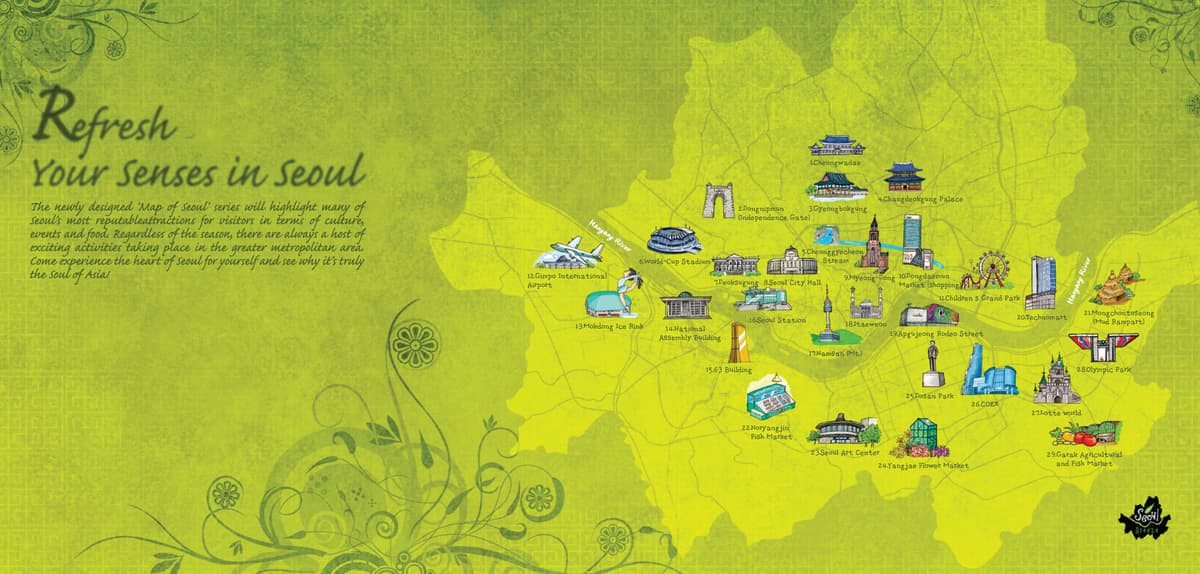
서울관광 지도카드는 서울의 주요 관광지 29곳을 소개하는 홍보물이다. 경복궁, 창덕궁 등 역사 유적지와 동대문시장, 노량진수산시장 같은 쇼핑 명소, 롯데월드·코엑스 등 놀이시설까지 다양한 서울의 모습을 담아, 전통과 현대가 공존하는 수도 서울을 소개한다.
EnglishThe Seoul Tourism Map Card is a promotional item introducing 29 major tourist spots in Seoul. It shows the many faces of Seoul, where tradition and modernity meet — from historic sites like Gyeongbokgung Palace and Changdeokgung Palace, to shopping spots like Dongdaemun Market and Noryangjin Fisheries Wholesale Market, to entertainment venues like Lotte World and COEX.
자료 원고 · English
Refresh Your Senses in Seoul!
1. Cheongwadae(Blue House) 청와대
The Cheongwadae consists of the main building that houses the official office of the resident of Korea and foreign guest reception halls, Yeongbingwan for large conferences and official events for foreign guests, and Chunchugwan, which is the press hall. Public tours of the Cheongwadae are available from Tuesday to Saturday, via the Cheongwadae homepage or by mail, in advance.
2. Dongnipmun (Independence Gate) 독립문
Situated in Seodaemun-gu in Seoul, Dongnipmun was constructed after the Gapo
Reform (1894~1896) as a symbol of independence on the site of Yeongeunmun, a gate where Chinese envoys were greeted. The construction of Dongnipmun symbolizes Korea’ s determination to become independent by cutting itself free from China, Japan, Russia, and Western powers. With the completion of the Seonsan Expressway in 1979, Seoul City moved Dongnipmun to its present location some 70m north of the original site and turned the surrounding area into a park.
3. Gyeongbokgung Palace 경복궁
Gyeongbokgung Palace was the main palace of the Joseon Dynasty (1392-1910). However, it was burnt down in 1592 during the Japaness invasions. The Cultural Heritage Administration began restoration of the palace in 1990, beginning with the dismantlement of the old Japaness government-general building together with Heungnyemun and its respective cloisters. Currently, the palace’ s main gate, where the Changing of The Guard Ceremony is held, is also undergoing reconstruction. teadily, the palace is regaining its old splendor.
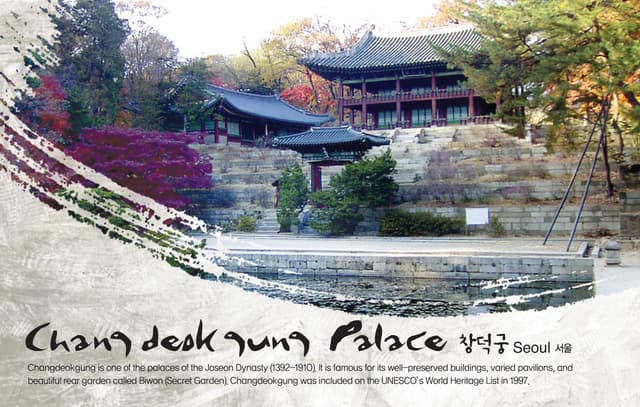
4. Changdeokgung Palace 창덕궁
Constructed in 1405, Changdeokgung was the palace most favored by many Korean kings in the Joseon dynasty (1392-1910). It was named a UNESCO world cultural heritage site in 1997 for its outstanding harmony with nature. Tour guide services are available in Korean, Japanese, English, and Chinese every day except Monday and Thursday.
5. Cheonggyecheon Stream 청계천
Cheonggyecheon has endured a series of changes in the long history of Seoul. Flowing through downtown Seoul, Cheonggyecheon had been a natural creek before Seoul became Korea’ s capital and referred to as “Gaecheon” for 500 years until its name was changed to“Cheonggyecheon.”Recently, it was restored completely in 2005 as part of an urban project designed to shape Seoul into an attractive city to foreigners and Seoulites alike. Since then, Chenggyecheon enjoys the reputation as a favorite cultural and leisure site of Seoulites.
6. World-Cup Stadium 월드컵 경기장
Consisting of four unique, eco-friendly parks, Pyeonghwa, Haneul, Noeul, Nanjicheon and Nanji Hangang Park, all well preserved in their natural respective environments, World Cup Stadium is a nice retreat from the bustle of the city. As camping is available in some areas, it is possible to rent equipment for recreational purposes. Nanjin Hangang Park remains the largest of all thirteen riverside parks.
7. Deoksugung 덕수궁
King Seonjo (1552-1608) took residence at present Deoksugung after Gyeongbokgung, Changdeokgung and Changgyeongung were destroyed during the Japanese occupation of Korea in 1592. Its name later changed to Gyeongungung, and was later referred to by that name after 1907. In front of the Daehanmun, the changing of the guards ceremony is held three times a day: 11:00, 14:00 and 15:30, Tuesday through Sunday. Guards are dressed traditional garb, as worn during ancient times. Visitors can take pictures with the guards and have a chance to try on traditional clothes.
8. Seoul City Hall 서울 시청
Located in the center of Seoul, Seoul City Hall neighbors Deoksugung and yeongbokguna and holds a variety of events all year round, such as the Hi Seoul Festival four times a year. The 82-year-old main building is slated to be transformed into a cultural space. The city hall will move to the annex building in Seosomun until the new city hall is completed in 2011.
9. Myeong-Dong 명동
As a leading shopping mecca in Seoul, Myeong-dong is a favorite tourist attraction foreigners never fail to visit. Currently, the Myeong-dong region is a key business area in Seoul and boasts a reputation as a financial center and the center of cutting-edge popular culture in Seoul. It is also home to the Korea Federation of Banks, YWCA, and the UNESCO.
10. Dongdaemun Market(shopping) 동대문 시장
Located in Jongno-gu in Seoul, Dongdaemun market is famous for its fashionable, affordable clothing and wide range of beauty products. The area remains a magnet for shoppers and is busy at all hours of the day and night.
11. Children’ s Grand Park 어린이 대공원
Situated in Gwangjin-gu, Children’ s Grand Park is running from 5:00 a.m, to 10:00 p.m. except for animal park open until 6:00 p.m.
12. Gimpo International Airport 김포국제공항
Situated in Gangseo-gu, Gimpo Airport was renamed Gimpo International Airport by presidential order in 1958 and was then upgraded into full-scale international hub in 1971. Nowadays, the airport provides extra amenities for customers with the newly onstructed multicultural complex called ‘ Sky City’ for both entertainment and shopping.
13. Mokdong Ice Rink 목동 아이스링크
Located in Yangcheon-gu, Mokdong Ice Rink was completed in 1989 and remains a symbol of Korea representing Winter Sports, next to the heralded Taereung Indoor Ice Rink. The ice rink generally opens from 2:00 p.m. to 6:00 p.m., Monday to Friday for both members and the general public.
14. National Assembly Building 국회의사당
The National Assembly Building is located at Yeouidodong, Yeongdeunpo-gu in Seoul and near the Hangang Park. The modern building, in perfect harmony with Korean traditional beauty was completed in August 1975. The building is loaded with symbolism. For instance, the 8 pillars on the building facade symbolize the 8 Korean provinces and the dome roof represents unity in difference, the essence of parliamentary democracy.
15. 63 Building 63빌딩
Situated on Yeouido, the 63 Building consists of the 63-story main building and 4-story annex building. The first basement of the main building is a cultural complex that houses a food court, a cafe high-end restaurants, 63 Sea World, and a movie theater. Visitors can enjoy the panoramic view of Seoul over a cup of coffee or a cocktail in the Sky Deck Cafe or the 63 Observation Deck on the 60th floor.
16. Seoul Station 서울역
Opened as the Gyeongseong Station in 1900, the Seoul Station is a gateway to Korea’ s capital, Seoul with an average of some 90,000 passengers a day. Since Korea’ s bullet train KTX began operating in April 2004, the Seoul Station has transformed itself into a compound station with a major department store and a large retail store for both shopping and traveling.
17. Namsan (Mt.) 남산
Located in the center of Seoul, Seoul Tower sits atop Namsan Mountain, surrounded by 10 million city dwellers. Owing to the tower’ s unique structure, the observatory section offers spectacular views of the changing foliage throughout all seasons. N Seoul Tower was renovated in 2005 with newly designed high tech multi media. Many citizens and foreign tourists have visited the Tower and were taken in by the scenic view of the city while also enjoying the surrounding nature of the mountain. You can go up to the tower by taking cable car available from 10:00 a.m. to 10:30 p.m.
18. Itaeweon 이태원
As the U.S. army base and many foreign missions settled in the Yongsan area after the Korean War, Itaeweon has become a shopping mecca for cheap goods. As a major ourist attraction in Seoul, the streets of Itaeweon are bustling with foreign tourists. Also, many embassies including Romania, Argentina, and Denmark as well as foreign residents are nestled in the region.
19. Apgujeong Rodeo Street 압구정 로데오 거리
Apgujeong-dong is famous for Apgujeong Rodeo Street, an upscale fashion district that purports to be Beverly Hills’ Rodeo Drive in Korea. Established as a fashion center in the early 1990s, Rodeo Street in Apgujeong-dong is the very place for Korean youths and foreigners to grasp the latest fashion and cultural trends.
20. Technomart 테크노마트
Established along the Hangang(river) in 1998, Technomart is a multi-compound building with some 2500 electronics stores, clothing shops, and a state-of-the-art multiplex movie theater. Moreover, the Sky Park on the 9th floor with a breathtaking view of Seoul is named as the site for outstanding views of Seoul.
21. Mongchontoseong (Mud Rampart) 몽촌토성
Mongcheontoseong is the area featuring remnants dating back to the ancient Bakje-era. It was named 297th historic sites in 1982 for its outstanding history value. There are history museums exhibiting excavations of both Mongchontoseong and eokchontoseong.
22. Noryangjin Fish Market 노량진 수산시장
Noryangjin Fish Market is noted for its lengthy tenure in the wholesale industry. Over eighty years in operation, the market features such seafood delights as sea mustard, oyster, and globefish.The morning of the market begins with roaring voices and lasts all the way through the chilly air of daybreak. Also, the market offers visiting program for children.
23. Seoul Art Center 서울아트센터
Seoul Art Center (SAC) was eventually completed in 1990. Noted for its faithful devotion to experimental initiatives and original performances & exhibitions, the center is loved by myriad art lovers and culture aficionados. Moreover, SAC remains the city’ s main venue for a host of cultural and art events.
24. Yangjae Flower Market 양재꽃시장
Known commonly as Yangjae Flower Market, the flower market in Yangjae-Dong is located in Seocho-gu in Seoul. It is an idea place to enhance your mood by just looking at a wide variety of beautiful fresh and artificial flowers and various accessories. Moreover, Seocho-gu launched the “Beautiful Flower Road Project” to adorn the street lights of major expressways with hanging planter flowers.
25. Dosan Park 도산 공원
Located in Gangnam-gu, Dosan Park was constructed in 1973 to commemorate an aspiring patriot and national hero. There is grave for his wife Lee Hye-yeon, statues commemorating Ahn Chang-ho also called Philip Ahn, memorial museum and gym. You can visit anytime, year round.
26. COEX 코엑스
Established in 1979, COEX is located in the central business area and furnished convenient facilities including conference rooms, shopping malls and offices for both doing business and enjoying entertainment. In addition to accommodating the commercial needs of business travelers, the COEX also boasts numerous stores, an art hall, many restaurants an aquarium and a movie theatre.
27. Lotte world 롯데월드
Located in Jamsil, construction began in 1985 to transform the area into a virtual shopping Mecca and ultimate amusement park facility for both foreigners and Seoulites alike. Consisting of a huge indoor park called Lotte World Adventure, Lotte World also connects to an impressive outdoor area as well, replete with activities and various theme park rides. Many events and programs held all year round. Hours of Operation: 9:30 a.m. to 11:00 p.m. Year-round.
28. Olympic Park 올림픽 공원
Started in 1984 for the 1986 Asian Games and the 1988 Seoul Olympics and completed in 1986, Olympic Park is full of artworks and outdoor sculptures that still vividly capture the Olympic fever in Korea. The park houses well-tendered large and small outdoor squares including Peace Square, gymnasiums in various sizes and the Olympic Hall in a clean natural environment.
29. Garak Agricultural and Fish Market 가락 농수산물 시장
Seated in Garak-dong, Songpa-gu in Seoul, this wholesale market that processes a large quantity of produce and seafood promptly sells a variety of foodstuffs and produce including fruits like apples, tangerines, and grapes and seafood like mackerel, clams, dried anchovies, and dried seaweed.
더 보기 ▾