홍보물
태극기 스티커 (2014)
Taegukgi Stickers (2014)
한국어
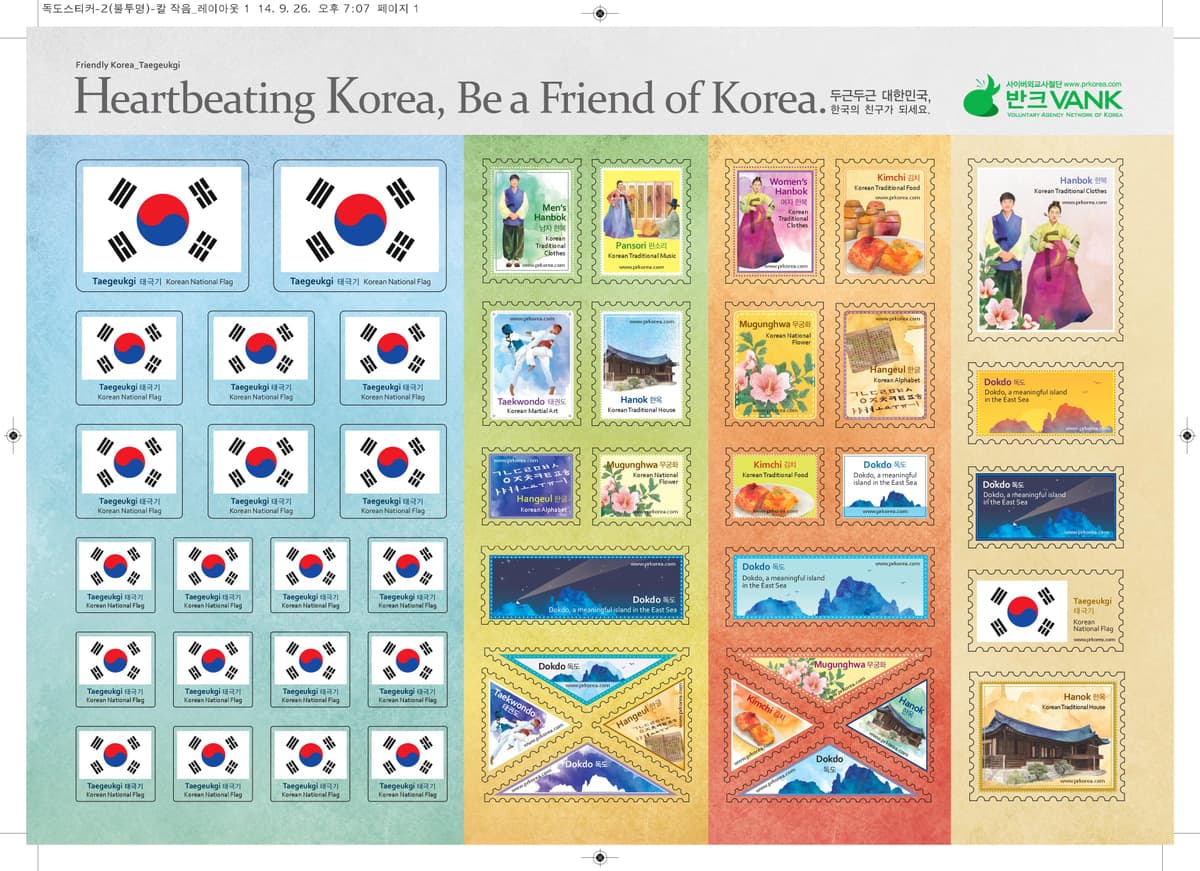
태극기 스티커는 한국에 대한 인식이 부족한 세계인에게 한국의 상징을 쉽고 재미있게 소개하는 스티커형 홍보물이다. 태극기·무궁화·한글 등 기본 상징과 태권도·김치·한복·한옥·판소리·독도 등 역사문화 상징을 아름다운 이미지와 함께 담았다.
EnglishTaegukgi stickers are a sticker-style promotional item that introduces Korea's symbols in an easy and fun way to people around the world who may not know much about Korea. They feature basic symbols like the Taegukgi (Korean national flag), mugunghwa (rose of Sharon), and Hangeul, along with historical and cultural symbols such as Taekwondo, Kimchi, hanbok (traditional Korean clothing), hanok (traditional Korean house), Pansori, and Dokdo, all shown with beautiful images.
자료 원고 · 한국어
원고
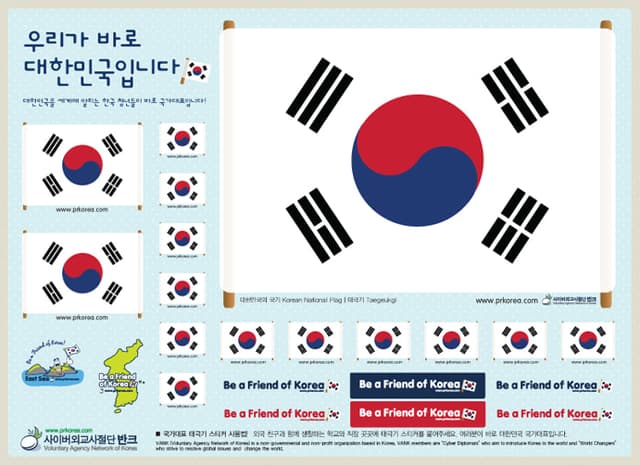
태극기는 한국의 국기로, 흰색 바탕에 가운데 태극문양과 네 모서리의 4괘로 구성되어 있다. 가운데 태극문양은 음(파랑)과 양(빨강)의 조화를 상징하는데, 한국인들은 전통적으로 우주만물의 생성과 발전을 음과 양의 상호작용으로 여겨왔다. 또한 네 모서리의 4괘는 각각 하늘, 땅, 물, 불을 상징한다.
무궁화는 한국의 국화로 오래 전부터 한반도에 자라며 한국인의 사랑을 받아왔다. 그래서 자연스럽게 대한민국을 상징하는 국화가 되었다. 무궁화의 ‘무궁’은 영원을 의미한다. 이는 오 천년 역사를 이어온 한민족의 인내와 끈기 그리고 번영을 상징한다. 무궁화 꽃은 7~10월에 피는데 분홍색, 흰색 등 그 색깔이 다양하고 아름답다.
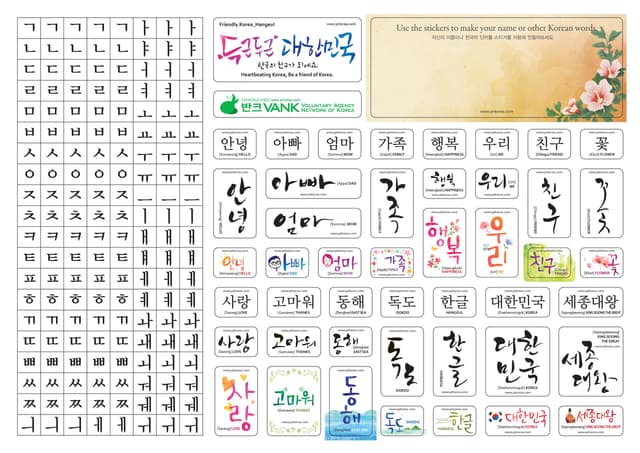
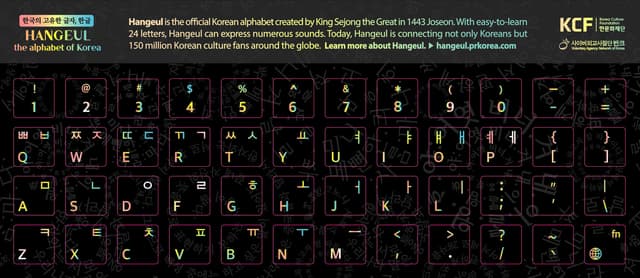
한글은 한국어를 기록하는 한국의 고유문자이다. 1443년 조선(1392-1910)의 세종대왕(1397-1450)이 발명하였는데 독창적이고 과학적인 글자로 알려져 있다. 한글 반포 시 발간된 해설서를 통해 한글의 자음은 사람의 발성기관을 본뜨고, 모음은 하늘?땅?사람을 뜻하는 철학을 담고 있음을 알 수 있다. 현대 한글은 자음 14자, 모음 10자 총 24자로 구성된다.
대한민국 동쪽 끝에 위치한 아름다운 섬 독도는 한국인들에게 특별한 의미를 주는 영토이다. 5천년 역사 속에서 독립을 지켜왔던 한국은 1910년부터 1945년까지 일본제국주의의 식민지배를 경험하였는데, 독도는 이 국권침탈과정 속에서 불법적으로 일본에 강제 편입되는 아픔을 겪었다. 이러한 이유로 다시 찾은 독도는 한국인들에게 나라의 주권과 독립 그리고 평화와 자유의 가치를 되새기게 하는 의미 있는 영토이다.
태권도는 대표적인 한국의 무예이자 스포츠이다. 국제적 스포츠로서 세계적인 명성을 얻고 있으며, 올림픽 공식 종목으로 채택되어 있다. 2014년 3월 세계태권도연맹(WTF: WORLD TAEKWONDO FEDERATION) 의 회원국은 206개국이다.
한국의 전통가옥인 한옥은 ‘자연과의 조화’를 중요하게 여긴다. 그래서 주변 자연경관을 거스르지 않는 곳에 나무, 흙, 돌 등의 주변 자연재료를 사용하여, 지형을 훼손하지 않는 형태로 집을 지었다.
판소리는 한 사람의 소리꾼이 북 치는 사람의 장단에 맞추어 펼치는 한국고유의 음악극이다. 소리꾼은 소리뿐 아니라 말, 몸짓을 섞어가며 공연하는데 청중들도 적극적으로 반응하며 참여한다.
한복은 한국의 전통 옷으로 고대부터 그 형태가 전해져 현대에 이른다. 평면적인 옷이지만 입으면 풍성한 주름이 잡히며 맵시가 난다. 옷의 폭이 넉넉하여 크게 체형의 구애 없이 입을 수 있고, 움직임이 많은 한옥의 좌식생활에 잘 맞는다.
김치는 한국의 대표적인 음식으로 소금에 절인 채소에 젓갈과 양념을 혼합하여 저온에서 발효시켜 만든다. 지역과 계절, 주재료에 따라 김치를 담그는 방법이 매우 다양한데 그 종류가 무려 200여가지가 넘는다.
더 보기 ▾자료 원고 · English
Taegeukgi 태극기
Taegeukgi is Korea’s national flag. It has a white background with a red and blue Taegeuk circle in the center and trigrams in all four corners. The Taegeuk circle represents harmony between yin (blue) and yang (red), reflecting the Korean people’s traditional belief that the creation and evolution of all things in the universe result from the interaction between yin and yang. The four trigrams stand for heaven, earth, water and fire.
Mugunghwa 무궁화
Mugunghwa is Korea’s national flower. It has been grown on the Korean peninsula for thousands of years. The Korean people have developed a special attachment to this flower, and Mugunghwa was naturally chosen to represent Korea. Mugung means eternity, which symbolizes the people’s patience and tenacity that enabled the nation to survive and prosper for 5000 years. Mugunghwa blossom in various shades, such as white and pink, usually from July to October.
Hangeul 한글
Hangeul is the native alphabet of the Korean language. It is a unique and scientific writing system that was invented by King Sejong (1397~1450) in 1443 during the Joseon Dynasty (1392~1910). Its original manuscript and commentaries explain that Hangeul consonants are modeled after the shapes of vocal organs, and vowels reflected the philosophy of uniting heaven, earth, and human. Contemporary Hangeul consists of 14 consonants and 10 vowels.
Dokdo 독도
Dokdo is Korea’s easternmost island. It is a special place to the Korean people. Korea has maintained its independence throughout its 5000 years of history. However, from 1910 to 1945, Korea went through the Japanese occupation. Dokdo was also illegally annexed by Japan. With the independence of Korea, Dokdo was returned to its home country. In the minds of the Korean people, Dokdo is not only a symbol of the country’s independence and sovereignty, but also a reminder of the importance of peace and freedom.
Taekwondo 태권도
Taekwondo is Korea’s traditional martial art and sport. It is a global and Olympic sport that has gained worldwide popularity. As of March 2014, the World Taekwondo Federation (WTF) has 206 member nations.
Hanok 한옥
Korea’s traditional Hanok housing emphasizes harmony with nature. Hanok buildings were built of natural materials, such as wood, soil, and stone, with careful consideration not to damage the surrounding natural landscape.
Pansori 판소리
Pansori is Korea’s traditional music genre, which is performed by one singer to the drum beats of a drummer, called Gosu. The singer combines narrative and gesture with singing, while the audience responds and participates in the performance.
Hanbok 한복
Hanbok is Korea’s traditional dress. Its style has evolved since ancient times. When Hanbok is worn, the multiple folds of fabric create an elegant volume. Because of its loose fit, Hanbok is comfortable for all body types and suitable for the traditional Korean lifestyle of sitting on the floor.
Kimchi 김치
Kimchi is Korea’s popular national dish. It is made by fermenting cabbage at a low temperature after seasoning with salt and a mixture of salted fish sauce and other condiments. Depending on the region, season, and main ingredients, over 200 types of Kimchi exist in Korea.
더 보기 ▾