홍보물
유형문화유산지도 (2022)
World Heritage Map (2022)
한국어
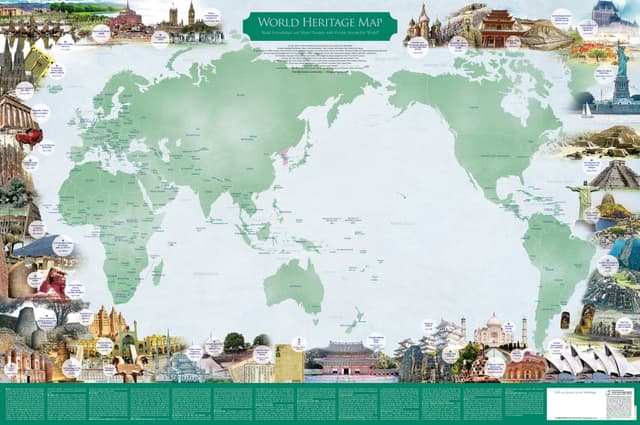
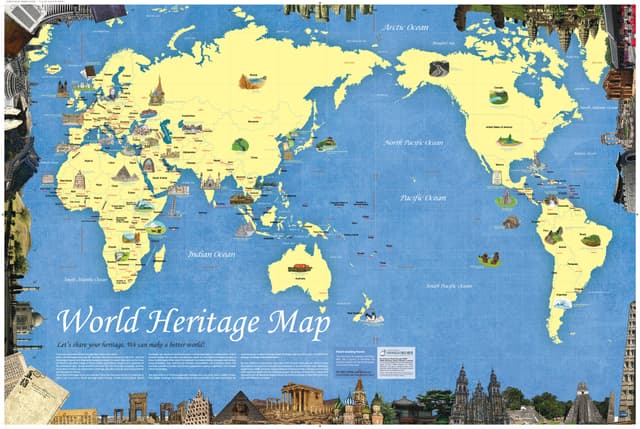
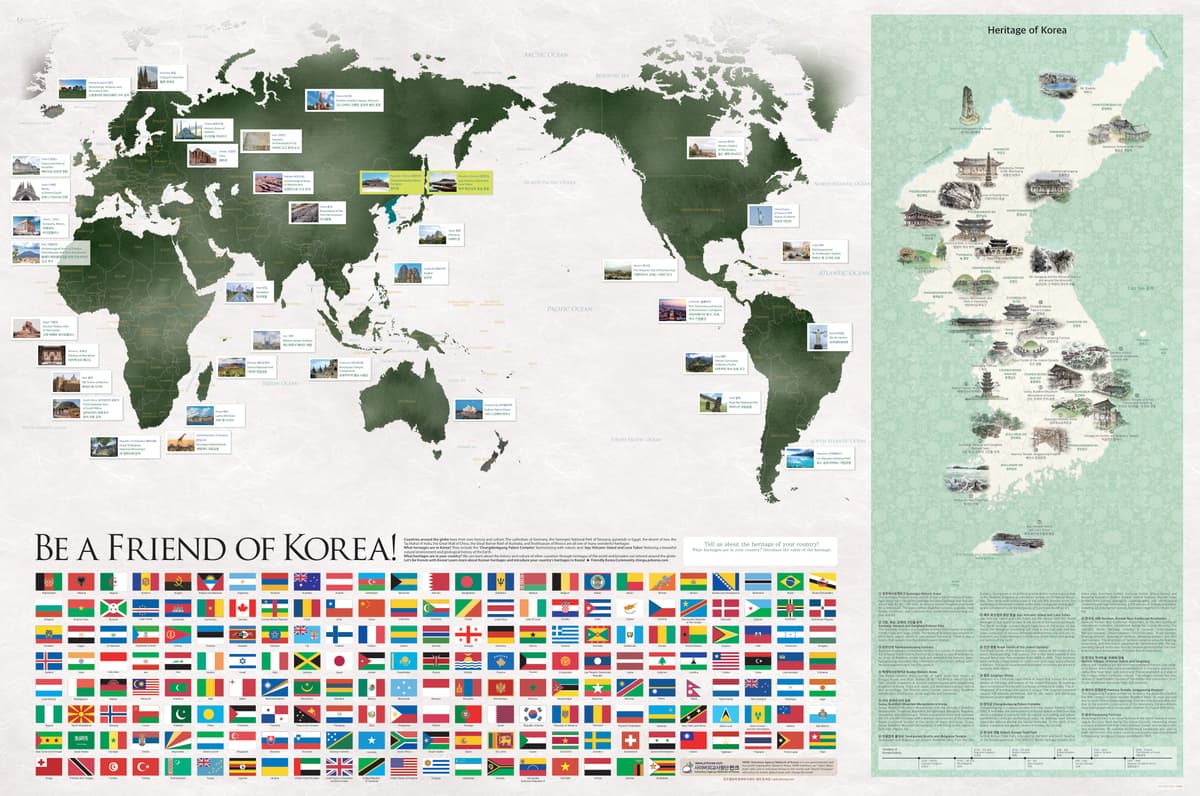
유형문화유산지도는 한국의 유네스코 유형문화유산 15개를 세계의 유형문화유산 35개와 함께 소개하는 홍보물이다. 신라 천 년 고도의 유적이 모인 경주역사유적지구를 비롯한 한국의 유산을, 세계 각국의 유형문화유산과 나란히 담아 상호 교류를 제안한다.
EnglishThis promotional material introduces Korea's 15 UNESCO World Heritage sites alongside 35 World Heritage sites from around the globe. It features Korean heritage, including Gyeongju Historic Areas, home to the remains of Silla's thousand-year-old capital, displayed side by side with World Heritage sites from other countries to suggest mutual exchange.
자료 원고 · English
1. 경주역사유적지구 Gyeongju Historic Areas
The Gyeongju Historic Areas consist of five areas in the city of Gyeongju. Many relics remain in Gyeongju because Gyeongju was the capital of Silla (57 BC – AD 935), an ancient Korean kingdom that lasted for a millennium. The areas contain Buddhist temples, pagodas, royal tombs, fortresses, and sculptures that reveal Silla’s outstanding culture and art.
2. 고창, 화순, 강화의 고인돌 유적 Gochang, Hwasun, and Ganghwa Dolmen Sites
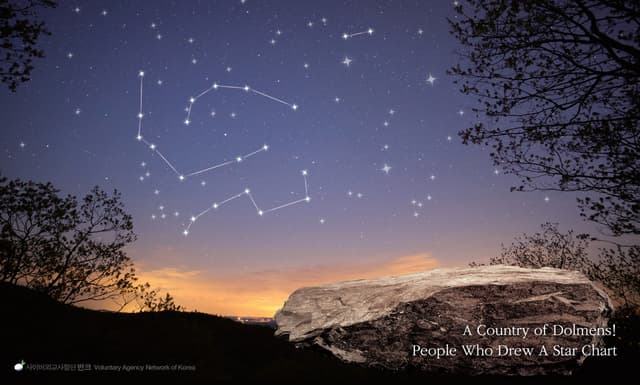
The Gochang, Hwasun, and Ganghwa Dolmen Sites consist of ancient tombs made with large stones. Hundreds of dolmens are concentrated in each region, which is rare around the world. There is also a quarry that reveals how the dolmens were created.
3. 남한산성 Namhansanseong Fortress
Namhansanseong is a mountain fortress in a suburb of Joseon’s capital of Seoul. It was built to function as a capital in case of emergency. An army of Buddhist monks built and defended the fortress. Namhansanseong represents the culmination of East Asia’s military architectural engineering in the 17th century.
4. 백제역사유적지구 Baekje Historic Areas
The Baekje Historic Areas consist of eight areas that remain in Gongju, Buyeo, and Iksan. Baekje (18 BC – AD 660) is one of the Korean ancient kingdoms. It actively communicated with neighboring kingdoms in Korea, China and Japan, and developed a unique culture and technology. The historic areas contain palace sites, Buddhist temple sites, royal tombs, stone pagodas, and fortresses.
5. 산사, 한국의 산지승원 Sansa, Buddhist Mountain Monasteries in Korea
Sansa, Buddhist Mountain Monasteries in Korea, includes 7 Buddhist monasteries, Tongdosa, Buseoksa, Bongjeongsa, Beopjusa, Magoksa, Seonamsa, and Daeheungsa. These monasteries were built between the 7th and 9th centuries with a distinct characteristic of the madang (open courtyard) located at the center of major structures. Today, Sansa, Buddhist Mountain Monasteries, is still acting as the capital of faith and religious life.
6. 석굴암과 불국사 Seokguram Grotto and Bulguksa Temple
Seokguram and Bulguksa are ancient Buddhist relics from the Silla Dynasty. Seokguram is an artificial granite grotto containing a statue of the Buddha. Bulguksa is a Buddhist temple on Tohamsan Mountain. They were both constructed in the late 8th century under the leadership of the prime minister at the time. Seokguram and Bulguksa are considered to be masterpieces of East Asian Buddhist art.
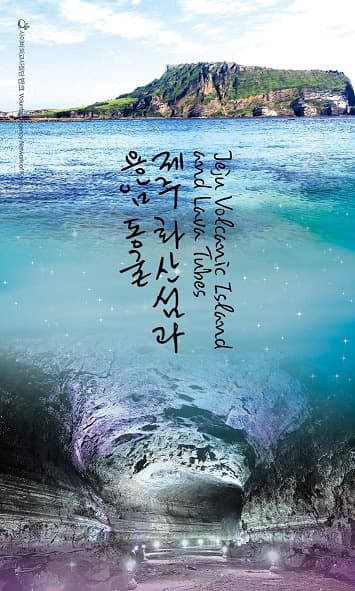
7. 제주 화산섬과 용암동굴 Jeju Volcanic Island and Lava Tubes
Jeju Volcanic Island and Lava Tubes are the natural UNESCO World Heritage of Jeju Island located at the South of the Korean peninsula. The World Heritage includes Mount Halla area at the center of Jeju Island, the Seongsan Ilchulbong tuff cone at the East end, and lava tubes composed of various carbonate speleothems. Jeju Volcanic Island and Lava Tubes represent both beauty of the nature and geological history of the Earth.
8. 조선왕릉 Royal Tombs of the Joseon Dynasty
The Royal Tombs of the Joseon Dynasty consist of 40 tombs of Joseon’s deceased kings and queens. The tombs were created in and around Seoul over five centuries from 1408 to 1966. Their locations were carefully chosen based on strict royal court rules and Confucian traditions. The burial mounds and associated structures are placed in harmony with nature.
9. 종묘 Jongmyo Shrine
Jongmyo is a Confucian royal shrine in Seoul that houses the spirit tablets of the kings and queens of the Joseon Dynasty. Its buildings were constructed strictly with Confucian architectural styles. The arrangement of buildings and spaces is unique. The Jongmyo ancestral ritual is still annually performed, and its rite, music, and dance are preserved as intangible heritage.
10. Changdeokgung Palace 창덕궁
Changdeokgung is a palace from the Joseon Dynasty (1392-1910). It embodies the characteristics of Korean palace architecture that places a building in harmony with its natural surrounding and follows conventional Confucian architectural styles. Its buildings were placed organically without altering the natural landscape. To the north of the palace, a spacious rear garden, Huwon in Korean, sits on a hill.
11. 한국의 갯벌 Getbol, Korean Tidal Flats
Getbol, Korean Tidal Flats, is located at the West and South beaches of the Korean peninsula. The UNESCO World Heritage includes 4 of these sites, Seocheon Getbol, Gochang Getbol, Shinan Getbol, and Boseong-Suncheon Getbol. Korean Getbol features diverse types formed from various geological, oceanographic, and climatological conditions with high biodiversity. 2,150 species of animals and plants, including 22 endangered species, have been reported to inhabit Getbol.
12. 한국의 서원 Seowon, Korean Neo-Confucian Academies
Seowon, Korean Neo-Confucian Academies, is the Neo-Confucian educational institution established during the Joseon Dynasty. The UNESCO World Heritage includes 9 Seowon, Sosu-seowon, Namgye-seowon, Oksan-seowon, Dosan-seowon, Piram-seowon, Dodong-seowon, Byeongsan-seowon, Museong-seowon and Donam-seowon. The structures of Seowon comprise areas for learning, veneration, and interaction, purposefully harmonized with the surrounding natural landscape. Korean Seowon demonstrates the characteristics and development of Korean Neo-Confucianism.
13. 한국의 역사마을: 하회와 양동 Historic Villages of Korea: Hahoe and Yangdong
Hahoe and Yangdong are the most representative historic clan villages in Korea. After their initial establishment in the early Joseon Dynasty, they have been well-preserved. The arrangement and style of the houses reflect Confucian culture. The villages contain the residences of head families, houses of the nobles and commoners, Confucian academies and study halls, and pavilions.
14. 해인사 장경판전 Haeinsa Temple Janggyeong Panjeon
The Janggyeong Panjeon in Haeinsa Temple is the depository built in the 15th century to store wooden Buddhist texts. Its main purpose was to store Palman Daejanggyeong (Tripitaka Koreana woodblocks). Due to the scientific construction of the depository, the woodblocks have been preserved in impeccable condition for nearly 600 years.
15. 화성 Hwaseong Fortress
Hwaseong Fortress is an urban fortress in the city of Suwon in Gyeonggido Province. Built during the Joseon Dynasty, Hwaseong shows a unique architectural style that combines Korean and western military architecture. All available architectural knowledge was used to build the fortress. The entire construction process was documented in Hwaseong Seongyeok Uigwe, published in 1801.
더 보기 ▾