홍보물
 1
1 2
2 3
3 4
4 5
5 6
6 7
7 8
8 9
9 10
10한국문화 엽서세트1 (2013)
Korean Culture Postcard Set1 (2013)
한국어
한국문화엽서세트1는 한국 문화 5개 주제를 각 2종씩, 총 10장으로 담은 홍보물이다. 한국의 섬(독도·울릉도), 전통 의상(여자·남자 한복), 한국 음식(김치·비빔밥), 명절(설날·추석), 한글과 한지까지 다섯 주제로 한국 문화의 다양함을 소개하며, 종이 액자 엽서 케이스로 일상에서 가까이 두고 볼 수 있게 했다.
EnglishKorean Culture Postcard Set 1 is a promotional item featuring 5 themes of Korean culture, with 2 designs for each theme, making 10 postcards in total. It introduces the diversity of Korean culture through five themes: Korea's islands (Dokdo and Ulleungdo), traditional clothing (women's and men's hanbok), Korean food (Kimchi and bibimbap), holidays (Seollal and Chuseok), and Hangeul and hanji, traditional Korean paper. The postcards come in a paper frame case, so people can keep and enjoy them close by in everyday life.
자료 원고 · English
Korea’s Islands_Dokdo
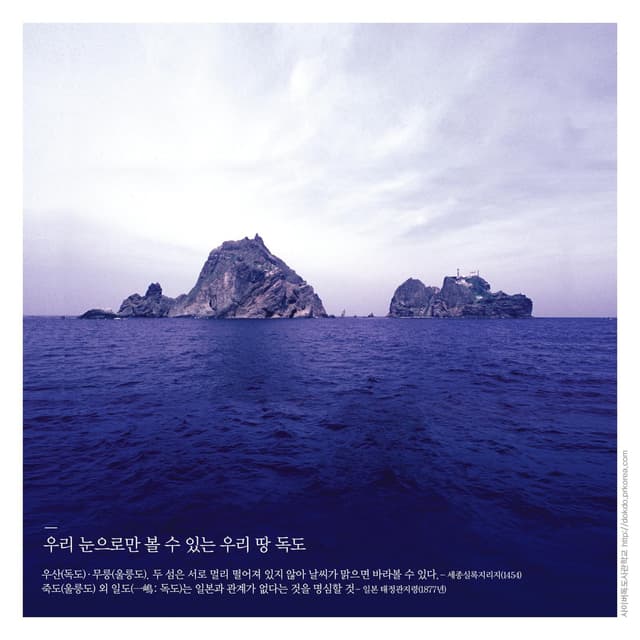
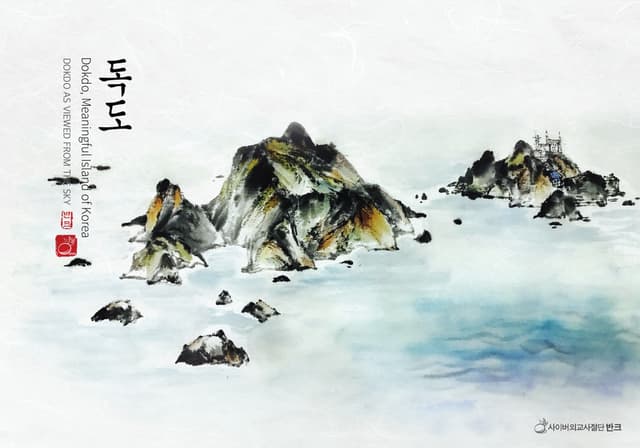
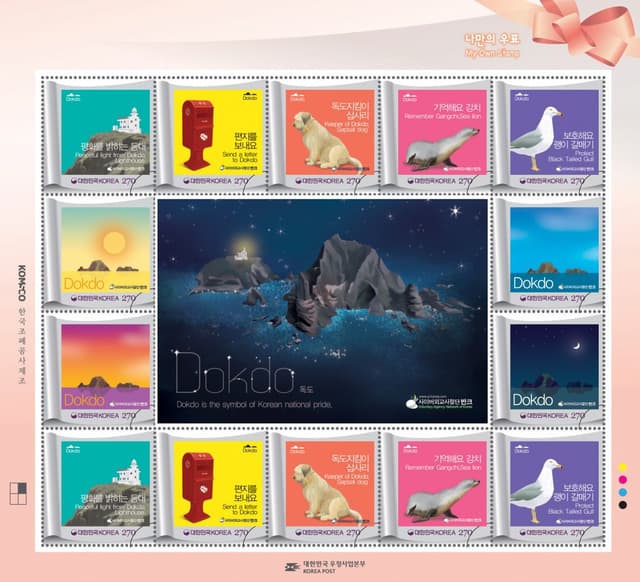
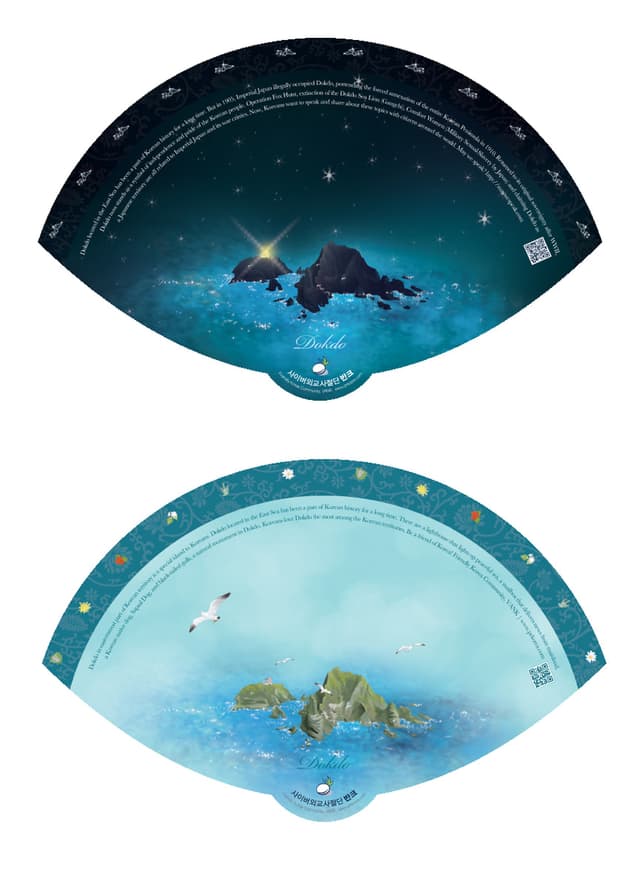
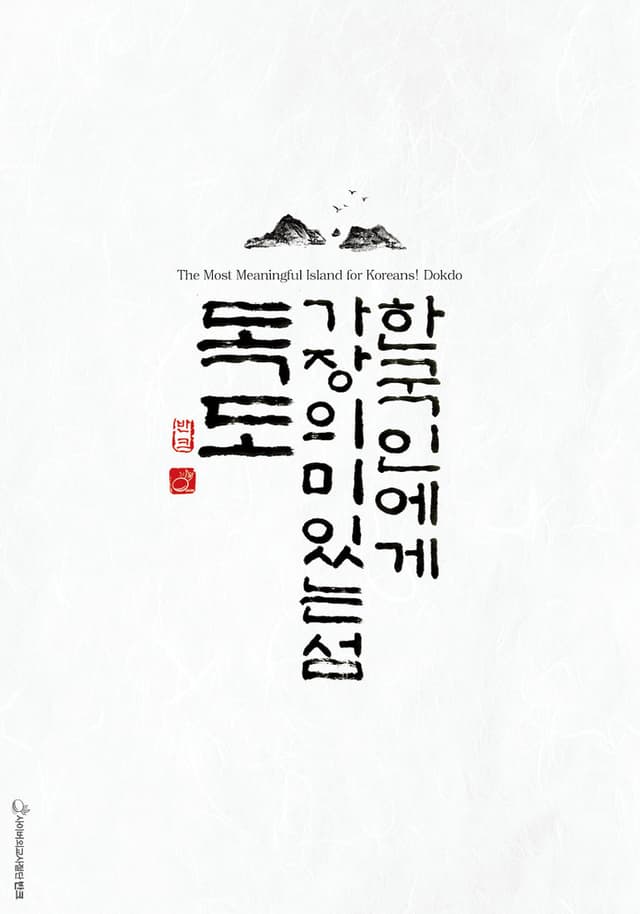
Dokdo is Korea’s easternmost island. It is a volcanic island that consists of two main islands and 89 small rocks. Due to its close distance to Ulleungdo, in good weather, Dokdo can be seen from Ulleungdo with the naked eye. For this reason, Dokdo has been affiliated with Ulleungdo since Korea’s ancient Silla Kingdom (57 B.C. ? A.D. 935). In 1905, Dokdo became the first Korean territory to be affected by Japan’s imperialist ambition. Today, Dokdo has a special meaning for the Korean people. Dokdo strengthens our will to protect peace and freedom by reminding us of our painful history that dates back to the 19th century when Japan started pursuing its imperialist ambitions, eventually leading to the Japanese Occupation Period (1910-1945).
Lighthouse: A lighthouse on Dokdo sheds light on our commitment to peace
Gangchi: Dokdo sea lions called Gangchi are extinct.
Mailbox: Dokdo’s address is Dokdo-ri, Ulleung-gun, Gyeongsangbukdo.
Sapsaree: Native Korean dog breed called Sapsaree guard Dokdo.
Wanghaeguk: Wild flowers called Wanghaeguk color Dokdo in light purple.
Parangdom: Neon damselfish called Parangdom swim freely around Dokdo.
Gwaengi-galmaegi: Black-tailed gulls called Gwaengi-galmaegi fly around Dokdo.
Korea’s Islands_Ulleungdo
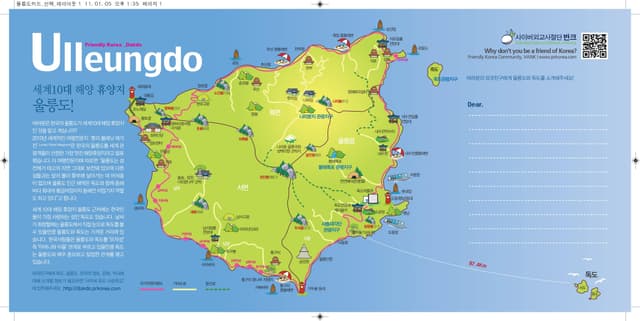
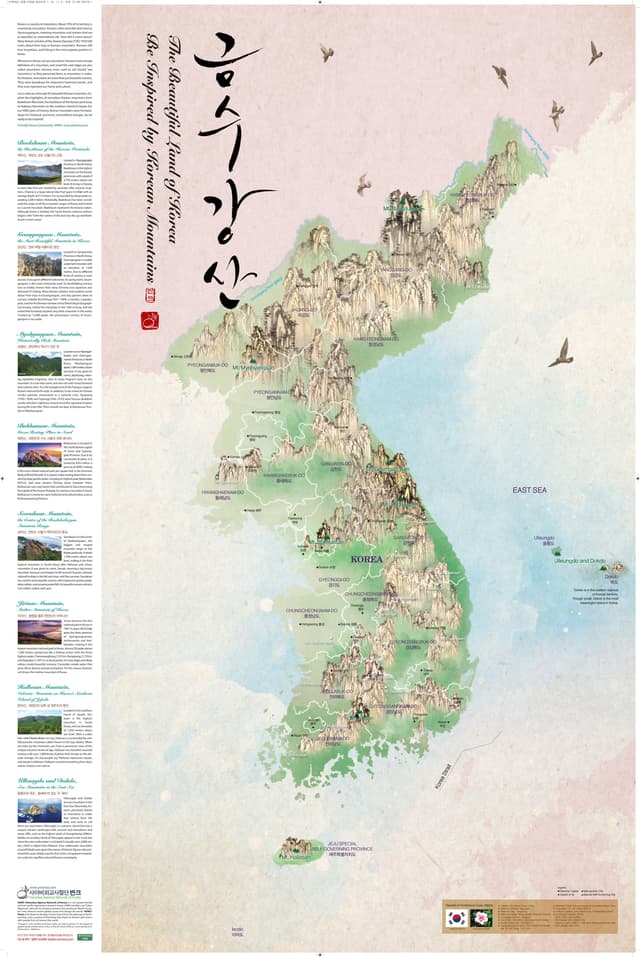
Ulleungdo is an island of 72.86km2 in the East Sea. There is almost no flat land, and its coasts mostly consist of cliffs because the entire island was formed by volcanic eruptions. Thanks to the ample supply of water, people have lived in Ulleungdo since ancient times. It is also home to 650 species of plants and 62 species of algae. The waters around Ulleungdo are full of various types of fish, including squid. The internationally renowned travel magazine, Lonely Planet, selected Ulleungdo as one of the world’s 10 best secret islands, and described it as perfect for hiking
Seonginbong: Seonginbong is the highest mountain peak in Ulleungdo.
Dongbaek-kkot: Camellia flowers called Dongbaek-kkot bloom in the snow.
Squid: Squid is Ulleungdo’s famous local specialty.
Hobak-yeot: Pumpkin candy or Hobak-yeot is Ulleungdo’s famous local product.
Myeongi-namul: Myeongi-namul is Ulleungdo’s famous wild herb.
Black Wood Pigeon: The Black Wood Pigeon is a rare species of resident birds in Ulleungdo.
Juniper Tree: Ulluengdo has the oldest juniper tree in the world.
Korea’s Traditional Dress_Women’s Hanbok
Hanbok is Korea’s traditional dress. Its style has evolved since ancient times. When Hanbok is worn, the multiple folds of fabric create an elegant volume. Because of its loose fit, Hanbok is comfortable for all body types and suitable for the traditional Korean lifestyle of sitting on the floor. Women’s Hanbok consists of a long-sleeve top and a voluminous skirt with an underskirt and trousers underneath. The length and width of the top have changed over time. Depending on the wearer’s social status and occasions, Hanbok was adorned with various accessories, such as a hairpin, a coronet, and a pendant.
Jeogori: Upper garment of Hanbok
Jobawi: Winter cap for women
Beoseon: Traditional Korean socks
Binyeo: Decorative hairpin
Jokduri: Ceremonial coronet
Norigae: Colorful pendant to adorn women’s Hanbok
Kkotsin: Silk shoes embroidered with flower patterns
Korea’s Traditional Dress_Men’s Hanbok
Men’s Hanbok consists of a long-sleeve top and trousers, and is occasionally worn with a jacket and a longer coat. The width of the trousers is wide so it is tied at the waist and ankles. The loose fit of Hanbok provides comfort for prolonged sitting on the floor. When going out or on formal occasions, noblemen wore a hat. Depending on the wearer’s social status, the hat’s brim and string had different styles. Nowadays, Hanbok is mostly worn as a ceremonial dress for special occasions, such as weddings and traditional holidays. There are also modern variations of Hanbok that emphasize comfort for daily wear in modern society.
Durumagi: Traditional long coat
Sultti: Strap to tie the Durumagi
Taesahye: Leather shoes worn by noble men
Gat: Traditional hat for adult men
Buchae: Hand fan to adorn men’s Hanbok
Baeja: Sleeveless vest worn over Jeogori
Korea’s Food_Kimchi
Kimchi is Korea’s popular national dish. It is made by fermenting cabbage at a low temperature after seasoning with salt and a mixture of salted fish sauce and other condiments. Depending on the region, season, and main ingredients, over 200 types of Kimchi exist in Korea. In 2006, the American magazine, Health, selected Kimchi as the World’s Healthiest Foods and explained its health benefits, including anti-aging and preventing obesity and cancer, due to its abundance of vitamins and healthy bacteria. Korea’s tradition of making a year’s supply of Kimchi during the early winter is called Kimjang, and it is listed on UNESCO’s Intangible Heritage Register.
Kimjang: Korea’s tradition of making a year’s supply of Kimchi during the early winter.
Yeolmu Kimchi: Water Kimchi made from young radish leaves.
Chonggak Kimchi: Kimchi made from young radish in the late fall.
Kkakdugi: Kimchi made from radish chopped in small square pieces.
Baechu Kimchi: Most common kind of Kimchi, made from cabbage.
Oi Sobagi: Stuffed cucumber Kimchi.
Mul Kimchi: Cool water Kimchi made with cabbage and radish.
Korea’s Food_Bibimbap
Bibimbap is one of Korea’s most popular dishes, and has begun to be recognized by health conscious eaters around the world. It is also often provided as an in-flight meal option. Bibimbap is made by mixing rice with an egg, red pepper paste, and assorted vegetables. Depending on the region and ingredients, there is a wide variety of Bibimbap. Among the many varieties, Jeonju Bibimbap is the most popular. Its defining feature is the use of sliced raw beef, along with soybean sprouts and other vegetables. Another unique kind is HeotJesabap in Andong, which is made by mixing rice with soy sauce and traditional ceremonial food, such as a croaker, a sea bream, and shark meat.
Gochujang(red pepper paste), Fried eggs, Gosari namul (bracken), Bean sprouts, Zucchini, Beef tartare, Spinach
Korea’s Traditional Holidays_Seollal (Lunar New Year)
Seollal, or the Lunar New Year, is one of Korea’s most important traditional holidays, which is celebrated on the first day of the Lunar New Year. It is a three-day holiday in both South and North Korea. Most Koreans travel to their hometowns to spend time with their families, which leads to severe traffic congestion throughout the country. On the day of Seollal, Korean families perform ancestral rites and visit relatives and neighbors. Younger family members bow to their elders and receive blessings from them. After finishing the ritual, people eat Tteokguk (rice-cake soup), a traditional Seollal food, and enjoy folk games, such as kite-flying and a traditional board game called Yutnori.
January 1 on the lunar calendar
Sebae: Korean tradition of bowing to elders on the morning of Seollal.
Yutnori: Traditional board game played with four sticks in teams.
Charye: Ancestral rite performed on Seollal.
Sebae Money: a gift of money given to children after bowing.
Kite-flying: Seollal tradition enjoyed by all generations.
Tteokguk: Traditional Seollal dish made with sliced rice cake.
Korea’s Traditional Holidays_Chuseok
Along with Seollal, Chuseok is one of Korea’s most important traditional holidays, which is celebrated on August 15 on the lunar calendar. Chuseok has a long history, with its earliest written record from the Silla Kingdom (57 B.C. ~ A.D. 935). It is a time of joy when people celebrate the year’s harvest in mild weather under the full moon. Most Koreans visit their hometowns, perform ancestral rites with freshly harvested rice and grains, and attend the graves of their ancestors. Looking up at the moon, people make wishes, and enjoy traditional folk games, such as Ganggangsullae (female group dance), for a celebration of good harvests.
August 15 on the lunar calendar
Ganggangsullae: Female group circle dance performed with singing.
Fall Harvest: Chuseok is a time to celebrate the year’s harvest.
Seongmyo: Tradition of visiting ancestral graves and paying respect.
Songpyeon: A classic Chuseok dish (rice cake).
Ssireum: Traditional Korean wrestling to compete with strength and skills.
Full Moon: During Chuseok, the full moon shines in the sky.
Hangeul and Hanji_Hangeul
Hangeul is the native Korean alphabet, invented by King Sejong(1397-1450) in 1443 during the Joseon Dynasty(1392-1910). At the time of its invention, it was called “Hunminjeongeum,” meaning proper sounds to instruct the people. Hundreds of years later, the purpose and principles of invention are still explicitly known to us since the Hunminjeongeum manuscript was published with a commentary. The manuscript is listed on UNESCO’s Memory of the World Register. Every year, UNESCO awards the King Sejong Literacy Prize to institutions, organizations, or individuals that have made an outstanding contribution to combating illiteracy.
October 9 Hangeul Day
King Sejong (1397-1450): The inventor of Hangeul, the Korean alphabet.
Hangeul: Contemporary Hangeul consists of 14 consonants and 10 vowels.
Jiphyeonjeon: Royal research institute that published many books in Hangeul.
Hunminjeongeum: Original manuscript that explains the structures of Hangeul.
Yongbieocheonga (1447): First work written in Hangeul
Hangeul and Hanji_Hanji (Paper)
Hanji is Korean paper made in a traditional way. As indicated in the largest number of entries on the Memory of the World Register in Asia, Korea has had an advanced recordkeeping culture and papermaking techniques, and has exported its paper since its ancient Silla Kingdom(57 B.C. ? A.D. 935). Hanji is made from the bark of mulberry trees, and is known for its durability. The superb durability is evidenced by Mugujeonggwang Daedaranigyeong, the world’s oldest surviving woodblock print, which was printed on Hanji and has been preserved for over 1,200 years. Koreans have used Hanji for writing, painting, and various other purposes, such as covering windows or walls and making handicrafts.
Making Hanji
① Preparing the materials: Hanji is made from one-year-old mulberry trees, from which the bark is peeled off, steamed, soaked in water, and dried.
② Steaming mulberry bark
③ Washing and bleaching
④ Beating
⑤ Straining the fibers
⑥ Removing water
⑦ Drying
⑧ Beating/Flattening
⑨ Ironing
더 보기 ▾k.source's Choice