홍보물
 1
1 2
2 3
3 4
4 5
5 6
6 7
7 8
8 9
9 10
10 11
11 12
12 13
13 14
14독도기록 서예 엽서 (2017)
Dokdo Historical Records Calligraphy Postcards (2017)
한국어
독도기록서예 엽서는 독도에 관한 역사 기록을 아름다운 한글 서예로 담아 세계에 소개하는 엽서 세트다. 총 14장으로 구성했으며, 한국인에게는 삼국사기·세종실록 등 한국 기록 4장, 일본인에게는 태정관지령 등 일본 기록 4장, 세계인에게는 독도 이야기 4장을 각각 한국어·일본어·영어로 전달해 대상에 맞게 독도를 알린다.
EnglishThis postcard set introduces the world to historical records about Dokdo through beautiful Hangeul calligraphy. It includes 14 postcards in total: 4 with Korean records, such as Samguk Sagi and Sejong Sillok (Annals of King Sejong), for Korean readers; 4 with Japanese records, such as the Dajokan Order, for Japanese readers; and 4 telling the story of Dokdo for a global audience. Each postcard is written in Korean, Japanese, or English to reach its intended audience.
자료 원고 · 한국어
독도 기록서예 엽서 세트 소개
한국인에게 가장 의미 있는 섬 독도에 대한 역사적 자료와 의미를 아름다운 한글서예로 써서 세계인들에게 독도를 소개한다. 엽서를 받는 대상을 한국인, 일본인, 세계인으로 구분하여 대상에 따라 차별화된 독도이야기를 각각 한국어, 일본어, 영어로 전달하여 더 효과적으로 소개할 수 있다.
홍보물 구성: 엽서 14장 한 세트
-한국인대상: 한국기록 4장-삼국사기(1145), 세종실록(1454), 숙종실록(1696), 대한제국 칙령 제41호(1900)
-일본인대상: 일본기록 4장-돗토리번 답변(1694), 원록구병자년조선주착안일권지각서(1696), 태정관지령(1877), 샌프란시스코 강화조약(1951)
-세계인대상: 독도이야기 4장-자유를 향한 한국인의 발걸음 독도, 아시아 평화를 향한 한국인의 꿈, 멈추지 않는 독립운동가의 심장 독도, 한국인에게 가장 의미 있는 섬 독도
독도 서예 엽서 원고
#1
독도는 대한민국의 가장 동쪽에 있는 영토로 한국인들에게 매우 의미 있는 섬입니다. 한국의 오랜 역사와 함께 해온 독도는 20세기 초 일본 제국주의 침략의 첫 번째 희생물로써 일본에 빼앗겼다가, 1945년 광복과 함께 다시 찾은 영토이기 때문입니다. 그래서 독도는 대한민국의 독립과 주권을 상징하는 특별한 영토가 되었습니다. 한국인들은 독도를 생각하며 평화를 생각하고, 독도의 영토주권을 확고히 지키며 아시아와 세계의 평화를 지켜 나갑니다.
#2
13년 6월 우산국이 귀복하여 해마다 토산물을 공물로 바치기로 하였다 – 삼국사기(1145)
『삼국사기』는 1145년 편찬된 삼국시대의 역사서다. 이 책에는 신라 지증왕 13년(514년)에 울릉도와 독도에 있었던 고대국가 우산국이 신라에 복속되었다고 기록되어있다. 또한 조선의 『동국 문헌비고』(1770년)에는 울릉과 우산(독도)이 모두 우산국 땅이고 우산은 일본이 말하는 송도라고 기록되어있다.
#3
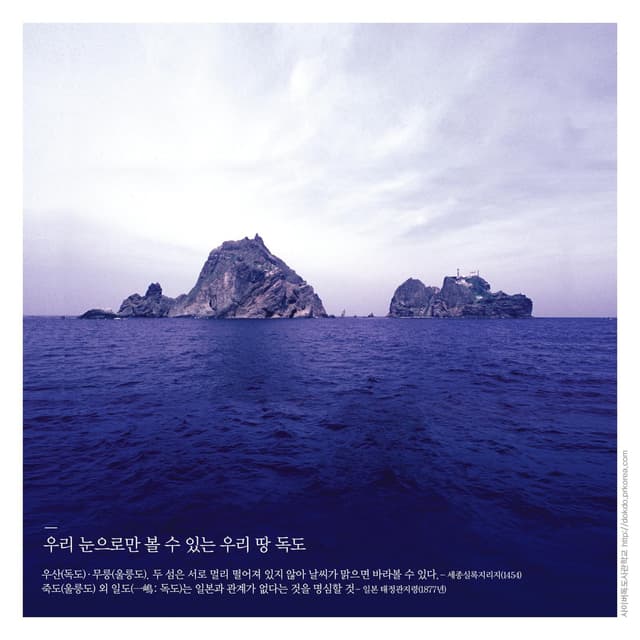
독도와 울릉도 두 섬은 서로 멀리 떨어져 있지 않아 날씨가 맑으면 바라볼 수 있다 - 세종실록 지리지(1454)
『세종실록』은 유네스코기록유산으로 등재된 조선왕조실록 중 세종(재위:1418-1450) 때의 기록이다. 이 책에는 무릉(울릉도)과 우산(독도)이 강원도 울진현에 속한 두 섬이고 날씨가 맑으면 서로 볼 수 있다고 기록되어 있다. 울릉도에서 날씨가 맑은 날에만 육안으로 볼 수 있는 섬은 독도가 유일하다.
#4
안용복 등이 함께 배를 타고 울릉도에 가서 일본국 백기주로 들어가 왜인과 서로 송사한 뒤에 양양현 지경으로 돌아왔다 – 숙종실록(1696)
안용복은 조선 숙종(재위: 1674-1720) 시대의 어부로 17세기 말에 일본에 2차례 건너가 울릉도와 독도가 조선 영토임을 알린 인물이다. 안용복 사건을 계기로 조선과 일본은 울릉도와 독도의 영유권에 대한 조사를 하게 되었는데, 결국 일본은 두 섬의 조선의 영유권을 확인하고 1696년 울릉도로의 도해금지령을 내렸다.
#5
울릉도를 울도로 개칭하고 도감을 군수로 개정하고 구역은 울릉전도와 죽도, 독도를 관할한다 - 대한제국 칙령 제41호(1900)
대한제국은 울릉도와 독도에 대한 관리를 강화하기 위해 1900년 10월 25일 울릉도와 그 부속 도서에 대한 황제의 칙령을 제정하여 관보에 실었다. 이를 통해 대한제국은 석도(독도)가 울릉도의 관할구역임을 밝히고, 울릉도와 독도에 대한 한국의 영유권을 국내외에 명확히 알렸다.
#6
울릉도와 독도 및 그 외 돗토리번에 속하는 섬은 없습니다 ― 돗토리번 답변(1695)
1693년에 조선 숙종(재위: 1674-1720)시대의 어부 안용복은 일본에 건너가 울릉도와 독도가 조선 땅임을 알렸다. 당시 일본정부는 울릉도에 대한 영유권을 알아보기 위해 돗토리번에 울릉도가 어느 나라 땅인지 문의하였고, 돗토리번은 울릉도뿐만 아니라 독도도 일본땅이 아니라고 답변하였다. 결국 일본은 1696년 울릉도로의 도해금지령을 내렸다.
#7
조선의 강원도 안에 울릉도와 독도가 있다 - 원록구병자년 조선주착안 일권지각서(1696)
안용복은 조선 숙종(재위: 1674-1720) 시대의 어부로 17세기 말에 일본에 2차례 건너가 울릉도와 독도가 조선 영토임을 알린 인물이다. 『원록구병자년 조선주착안 일권지각서』는 1696년 안용복이 두 번째로 일본에 건너갔을 때에 일본에서 작성한 기록이다. 조선의 강원도에 울릉도와 독도가 속한다고 말한 안용복의 진술이 기록되어 있다.
#8
울릉도 외 독도의 건에 대해 일본은 관계가 없다는 것을 명심할 것 - 태정관 지령(1877)
1876년 일본 정부는 일본의 지적을 편찬하였다. 이 과정에서 일본 내무성은 조사를 통해 울릉도와 독도가 일본과 관계없다는 결론을 내렸고 사안의 중요성을 고려하여 당시 일본의 최고행정기관인 태정관에 최종 결정을 문의했다. 1877년 태정관은 울릉도와 독도가 일본령이 아니라는 지령을 내렸다.
#9
일본은 한국의 독립을 인정하고, 제주도, 거문도 및 울릉도를 포함한 한국에 대한 모든 권리, 권원 및 청구권을 포기한다 ― 샌프란시스코 강화조약(1951)
제2차 세계대전을 일으키고 패전한 일본은 1951년 연합국과 전쟁을 마무리하는 샌프란시스코 강화조약을 체결하였다. 이 조약을 통해 일본은 한국의 독립을 인정하고 일본제국주의 침략의 결과로 빼앗은 모든 영토를 포기하였다. 독도는 일본제국주의 한반도 침략의 첫 번째 희생물이자, 한국의 주권회복의 상징이다.
자유를 향한 한국인의 발걸음! 독도 – 독도는 한국인에게 완전한 해방과 자유를 상징합니다.
독도는 20세기 초 일본 제국주의의 한반도 침략의 첫 희생물입니다. 1945년 한국의 광복과 함께 다시 찾은 독도는 한국인에게 완전한 해방과 자유를 상징합니다.
#11
아시아 평화를 향한 한국인의 꿈! 독도 - 독도를 향한 한국인의 꿈은 아시아를 전쟁 없는 평화로운 세상으로 만드는 것입니다.
1905년 일본은 한반도와 독도의 지정학적 위치를 활용해 러일전쟁을 승리로 이끌었고 이후 한 반도를 전진 기지삼아 아시아에 침략 전쟁을 일으켰습니다. 독도를 향한 한국인의 꿈은 일본으로부터 독도를 지켜 아시아를 전쟁 없는 평화로운 세상으로 만드는 것입니다.
#12
멈추지 않는 독립운동가의 심장! 독도 - 한국인의 가슴속에는 일본 제국주의의 강압적인 식민지배에 맞선 독립운동가의 심장이 뛰고 있습니다.
독도는 20세기 초 일본 제국주의의 한반도 침략의 첫 희생물로, 일본 제국주의의 강압적인 식민지배에 맞서 끊임없이 독립운동을 전개했던 한국 독립운동가의 멈추지 않는 심장입니다. 독도를 바라보는 21세기 한국인의 가슴속에도 독립운동가의 심장이 뛰고 있습니다.
#13
한국인에게 가장 의미 있는 섬! 독도
한국인에게 독도는 대한민국입니다.
삼면이 바다인 한반도에는 3천개가 넘는 섬이 있습니다. 독도는 한반도의 수많은 섬 중에서 한국인에게 시대와 세대를 넘어 지켜야할 소중한 섬으로 인식되고 있습니다. 한국인에게 독도는 대한민국입니다.
더 보기 ▾자료 원고 · English
Dokdo, the easternmost island in Korea, has a special meaning to the Korean people because it was the first Korean territory to fall victim to Japanese imperialism. It was returned to Korea with the country’s independence in 1945. So Dokdo become a symbol of Korean independence and sovereignty. When Koreans think of Dokdo, we are reminded of the importance of independence and sovereignty. For the sake of peace in Asia and the world, we will never lose the sovereignty of Dokdo again.
In June of the 13th year of the reign of King Jijeung, Usanguk (nation) surrendered and promised to provide local products every year for tributes. – Samguk Sagi (1145)
Samguk Sagi (1145) is a history book about the three kingdoms period. This book reads the ancient nation of Usanguk, occupying the present-day Ulleungdo and Dokdo, was subjugated to Silla Kingdom in 514 – the 13th year of the reign of King Jijeung. Donggukmunheonbigo (Reference Compilation of Documents on Korea, 1770) also reads that Ulleung and Usan(Dokdo) both belonged to Usanguk and that Usan was referred to as what Japan called Songdo.
Dokdo and Ulleungdo are close and each island can be seen from the other on a clear day. – Sejong sillok jiriji (1454)
Sejong sillok covers King Sejong’s reign (1418-1450), a part of the Annals of the Joseon Dynasty, which was inscribed on the UNESCO Memory of the World Register. This book reads that Ulleungdo and Dokdo belonged to Uljin in Gangwondo and that the two islands are visible from each other on a fine day. Dokdo is the sole island that can be seen only on a clear day with the naked eye from Ulleungdo.
An Yong-bok and other fishermen went to Ulleungdo and then to Hoki Province, Japan. They filed a complaint against Japanese fishermen and returned to Yangyang in Gangwondo. – Sukjong sillok (1696)
Fisherman An Yong-bok went to Japan twice in the late 17th century to clarify Joseon’s sovereignty over Ulleungdo and Dokdo. An’s protest led to an investigation about the sovereignty over the two islands by Joseon and Japan. In the end, Japan confirmed Joseon’s sovereignty and issued a ban on sailing to Ulleungdo in 1696.
Ulleungdo shall be renamed as Uldo, and Dogam (island superintendent) shall be promoted to Gunsu (county governor) to take charge of Ulleungdo, Jukdo, and Dokdo. – The Korean Empire’s Imperial Decree No. 41 (1900)
To reinforce its control of the two islands, Daehan Jeguk (Korean Empire) issued a decree regarding Ulleungdo and Dokdo on October 25, 1900, and documented it in its official gazette. By doing so, the empire made clear to the public its sovereignty over the two islands and Ulleungdo’s jurisdiction over Dokdo.
None of Ulleungdo, Dokdo, and the surrounding islets belongs to Tottori. – Response from Tottori Prefecture (1695)
In 1693 during King Sukjong’s reign (1674-1720), Joseon’s fisherman An Yong-bok confronted the Japanese authorities and confirmed Joseon’s sovereignty over Ulleungdo and Dokdo. The Japanese government inquired into the sovereignty over Ulleungdo, and Tottori prefecture responded that neither Ulleungdo nor Dokdo belonged to Japan. Consequently, Japan banned its fishermen from going to Ulleungdo in 1696.
Ulleungdo and Dokdo belong to Gangwondo, Joseon. – Memorandum on the Arrival of a Boat from Joseon in 1696 (1696)
An Yong-bok went to Japan twice in the late 17th century during Sukjong’s reign(1674-1720)to contest Japanese fishing around Ulleungdo. The memorandum on the Arrival of a Boat from Joseon in 1696 is a record of Japan’s investigation of this case in 1696. According to this record, An stated that Gangwondo of Joseon had jurisdiction over Ulleungdo and Dokdo.
Ulleungdo and Dokdo have nothing to do with Japan. - Dajokan Order (1877)
In 1876, the Japanese government published a new land registry. During this process, Japan’s Home Ministry investigated and concluded that Ulleungdo and Dokdo were not part of Japan. Considering the importance of this matter, the ministry inquired of Dajokan, then the highest administrative body of the Japanese government at the time. In1877, Dajokan issued an order to confirm that the two islands did not belong to Japan.
Japan recognizing the independence of Korea, renounces all right, title and claim to Korea, including the islands of Quelpart (Jejudo), Port Hamilton (Geomundo) and Dagelet (Ulleungdo). – San Francisco Peace Treaty (1951)
After its defeat in WWII, Japan signed the San Francisco Peace Treaty with the Allied Powers in 1951. In this treaty, Japan recognized Korea’s independence and renounced its right to all territories taken by force. Dokdo was the first victim of Japanese imperialism and became a symbol of Korea’s independence.
#10
Our Step toward Freedom! Dokdo – For the Korean people, Dokdo symbolizes full independence and freedom.
Dokdo was the first Korean territory taken by Imperial Japan in the early 20thcentury. It was returned to Korea in 1945, along with Korea’s independence from Japan. Dokdo became a symbol of our independence and freedom.
Our Step toward Lasting Peace in Asia! Dokdo – Dokdo symbolizes our dream toward building a peaceful Asia.
In 1905, Japan took Dokdo to use its geopolitical advantage and achieved victory in the Russo-Japanese War. Then, it took over Korea and waged wars to control other Asian countries. Our dedication to protecting Dokdo from Japan goes hand in hand with our desire to make Asia war-free and peaceful.
Our step toward Lasting Freedom! Dokdo
In our heart is the blood of Korean freedom fighters who fought Japanese imperialism.
Dokdo was the first step Japan took in taking away Korean territory in the early 20th century. And Korean freedom fighters sacrificed their lives to achieve Korea’s independence from Imperial Japan. In the 21st century, when we think about Dokdo their blood still runs through our veins, driving us to fight against imperialism.
The Most Meaningful Island for Koreans! Dokdo
For Koreans, Dokdo symbolizes our country.
Surrounded on three sides by oceans, Korea has over 3000 islands and islets. Dokdo is the most meaningful island, which we will always protect. To us, Dokdo means Korea.
더 보기 ▾